Why Can’t Globe Valves and Gate Valves Be Used Interchangeably?
In industrial piping systems, globe valves and gate valves are two of the most commonly used valve types for controlling the flow of fluids.
Many users have the following question during valve selection:
Both globe valves and gate valves can shut off pipelines, so why can’t they simply replace each other?
Although both valves are classified as shut-off valves, they are designed for different purposes. They have significant differences in:
Structure;
Operating principle;
Flow characteristics;
Installation requirements;
Application conditions.
Incorrect selection may lead to increased pressure loss, premature valve failure, leakage, or even affect the safety and reliability of the entire process system.
This article explains the key differences between globe valves and gate valves to help engineers make the correct valve selection.
Structural Differences Between Globe Valves and Gate Valves
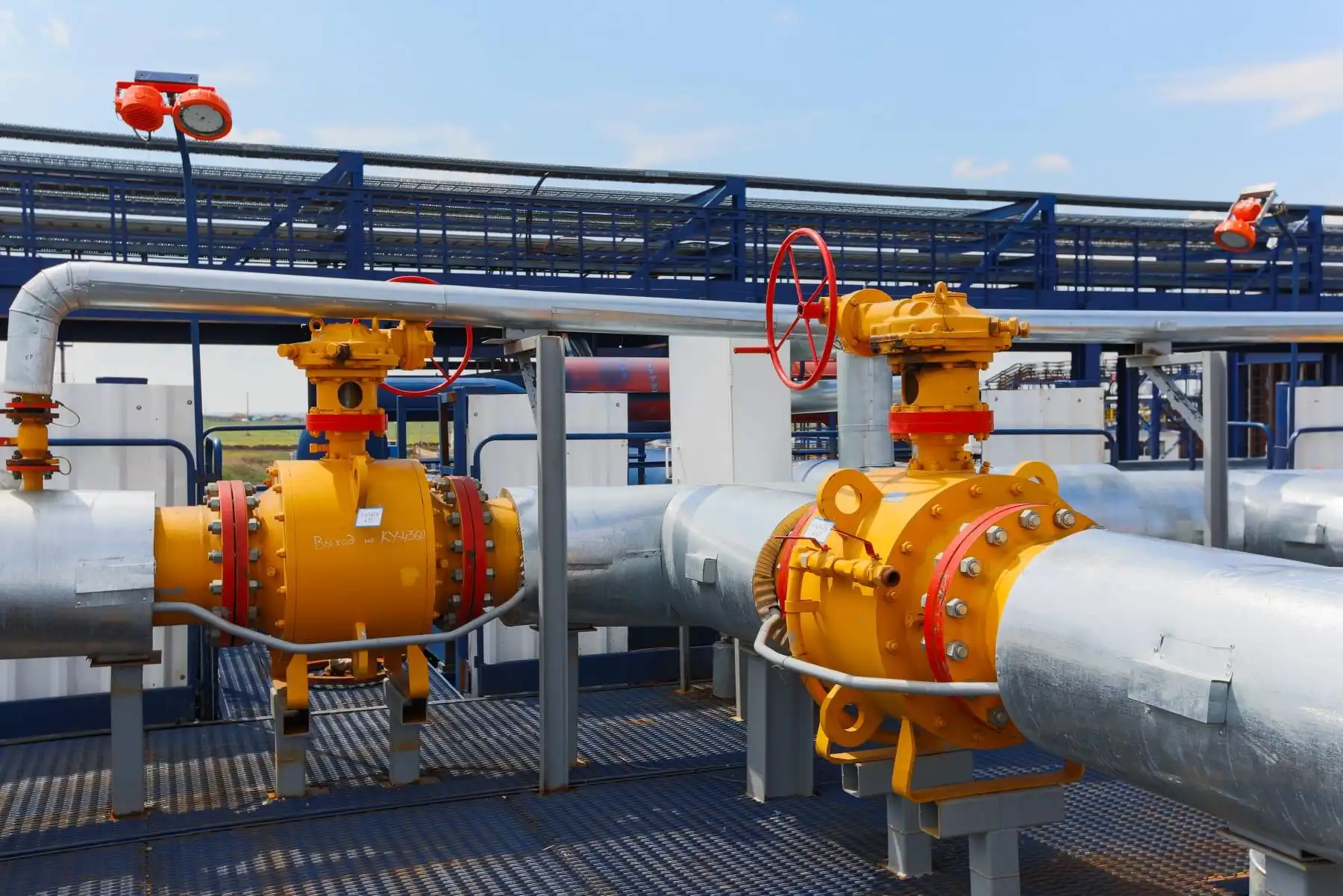
Structure and Features of Gate Valves
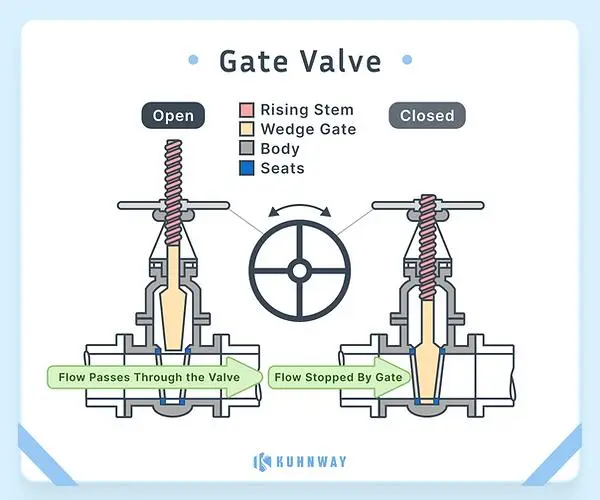
A gate valve uses a gate plate (wedge or parallel gate) that moves vertically to open and close the flow passage.
When the valve is closed, the gate moves downward and contacts the valve seats. Under the pressure of the medium, the gate is pressed tightly against the sealing surfaces, creating a tight shut-off.
A typical gate valve consists of:
Valve body;
Bonnet;
Gate;
Stem;
Valve seats;
Packing sealing system.
Main characteristics of gate valves:
Straight-through flow passage;
Low flow resistance when fully open;
Suitable for large flow applications;
Mainly used for fully open or fully closed operation.
However, during opening and closing, the gate moves along the sealing surfaces, causing friction between the sealing surfaces.
Long-term operation may result in:
Sealing surface wear;
Increased leakage;
Higher operating torque.
Especially when the valve is close to the fully closed position, a large pressure difference between upstream and downstream can cause high-speed fluid erosion on the sealing surfaces, accelerating valve damage.
Structure and Features of Globe Valves
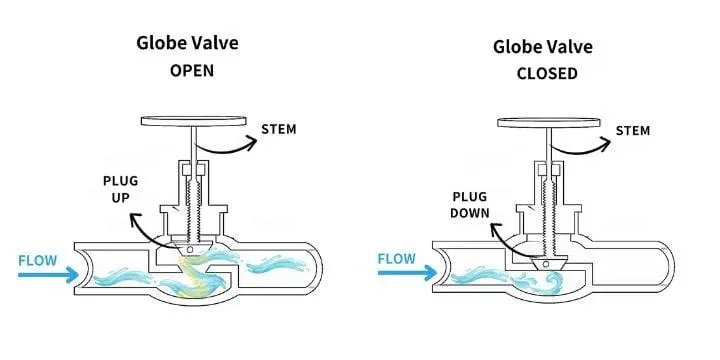
A globe valve controls flow by moving the valve disc vertically toward or away from the valve seat.
When closing, the disc moves downward and presses against the seat to shut off the medium.
Main characteristics of globe valves:
Excellent sealing performance;
Shorter disc travel distance;
Faster opening and closing;
Suitable for flow regulation.
From the external appearance:
For the same nominal size, gate valves are usually higher;
Globe valves are usually longer in face-to-face length;
Gate valves can have rising stem or non-rising stem designs;
Globe valves are generally designed with rising stems.
Therefore, when installation space is limited, the correct valve type must be selected according to the site conditions.
Difference in Operating Principles
Gate Valves Are Mainly Used for Shut-Off Service
Gate valves generally have two operating positions:
Fully open;
Fully closed.
When fully open, the gate is completely lifted out of the flow path, creating a nearly straight-through passage.
When fully closed, the gate blocks the flow completely.
Because the gate may experience strong turbulence and erosion when partially open:
Gate valves are not recommended for flow regulation.
Long-term throttling operation can cause:
Gate vibration;
Seat erosion;
Premature sealing failure.
Globe Valves Can Be Used for Both Shut-Off and Regulation
A globe valve controls flow by changing the opening area between the disc and seat.
The disc can remain at an intermediate position, allowing the valve to:
Adjust flow rate;
Control pressure changes;
Provide more accurate flow control.
Therefore, globe valves are commonly selected for applications requiring flow regulation.
Difference in Flow Characteristics
Gate Valves Have Lower Flow Resistance
When fully opened:
The flow passage is almost straight;
The fluid direction changes very little;
Pressure loss is minimal.
The typical flow resistance coefficient of a standard gate valve is approximately:
0.08–0.12
Therefore, gate valves are suitable for:
Long-distance pipelines;
Large diameter piping;
Systems requiring low pressure loss.
Typical applications include:
Oil and gas transmission pipelines;
Water treatment systems;
Chemical process pipelines.
Globe Valves Have Higher Flow Resistance
The internal passage of a globe valve is designed in an “S-shaped” flow path.
The fluid must change direction during flow, resulting in higher resistance.
The flow resistance of a standard globe valve is usually:
3–5 times higher than a gate valve.
However, globe valves provide better:
Flow regulation capability;
Sealing performance;
Control accuracy.
Therefore:
If low pressure loss is required → choose a gate valve.
If flow control is required → choose a globe valve.
Installation and Flow Direction Differences
Gate Valves Have No Fixed Flow Direction
Gate valves are generally designed for bidirectional flow.
The medium can flow:
From inlet to outlet;
From outlet to inlet.
Therefore, gate valves normally do not have strict installation direction requirements.
Globe Valves Must Be Installed According to Flow Direction
Globe valves usually have a specific inlet and outlet direction.
The valve body is marked with a flow arrow:
→
The valve must be installed according to this direction.
Incorrect installation may cause:
Increased operating torque;
Excessive stem stress;
Reduced sealing performance.
Globe valves are commonly installed with:
Flow entering from the lower side and leaving from the upper side.
Different Flow Installation Methods of Globe Valves
Medium Enters Below the Disc (Under the Disc Flow)
Advantages:
Lower pressure on the packing after valve closure;
Longer packing service life;
Easier maintenance under certain conditions.
Disadvantages:
Higher opening torque;
Greater axial force on the stem.
This method is generally suitable for:
Small-size globe valves (usually DN50 and below).
Medium Enters Above the Disc (Over the Disc Flow)
Advantages:
Lower opening torque;
Reduced stem stress.
Disadvantages:
Higher pressure on the packing.
This installation method is commonly used for:
Globe valves above DN200;
Electric globe valves.
Sealing Performance Differences
Globe Valves Provide Better Sealing Performance
When a globe valve closes:
The disc directly presses against the seat.
Because the sealing area is relatively small, the contact pressure is higher, providing:
Better sealing performance;
Easier leakage control.
Gate Valves Seal Through the Gate Surface
Gate valves achieve sealing through contact between the two sides of the gate and the valve seats.
Features:
Larger sealing area;
Higher machining accuracy requirements.
However:
The sealing surfaces are more vulnerable to erosion;
Long-term operation may result in leakage due to wear.
Why Can’t Globe Valves and Gate Valves Be Mixed?
Although both valves can shut off pipelines, their design purposes are different.
| Item | Gate Valve | Globe Valve |
|---|---|---|
| Main Function | Shut-off | Shut-off + Regulation |
| Closing Element | Gate | Disc |
| Flow Resistance | Low | High |
| Flow Regulation | Poor | Excellent |
| Flow Direction | Bidirectional | Directional |
| Opening Stroke | Long | Short |
| Operation Speed | Slow | Faster |
| Typical Application | Pipeline Isolation | Flow Control |
Replacing a gate valve with a globe valve may cause:
Increased pressure loss;
Higher energy consumption;
Increased operating cost in large pipelines.
Replacing a globe valve with a gate valve may cause:
Poor flow control;
Seat damage during throttling;
Reduced valve service life.
How to Select Between Gate Valves and Globe Valves?
Choose Gate Valves When:
Suitable for:
Fully open or fully closed operation
Large flow transmission
Low pressure loss requirements
Large diameter pipelines
Typical applications:
Oil and gas pipelines;
Chemical transportation systems;
Water treatment pipelines.
Choose Globe Valves When:
Suitable for:
Flow regulation required
Frequent operation
High sealing requirements
Typical applications:
Steam systems;
Heating systems;
Instrumentation piping;
Flow control systems.
Conclusion
Although gate valves and globe valves are both industrial shut-off valves, they are designed for different purposes.
Gate valves focus on:
Low flow resistance;
Large flow capacity;
Reliable isolation.
Globe valves focus on:
Better sealing;
Flow regulation;
Precise control.
Therefore, valve selection should not be based only on price or appearance. Engineers should consider:
Medium type;
Pressure and temperature;
Pipe size;
Flow control requirements;
Installation space;
Operating frequency.
Choosing the correct valve type is essential for ensuring the safe, stable, and efficient operation of industrial systems.

Get professional pre-sales technical consultation and valve selection services, customized solution services.

About CEPAI
Popular Blogs