How to Choose the Best Pneumatic Bellows Control Valve?
Selecting the proper control valve for a hazardous or high-purity operation is never a straightforward catalogue selection. If the process contains dangerous chemicals, volatile compounds, or media where even a trace leak is not acceptable, engineers are increasingly turning to the hermetically sealed Pneumatic Bellows Control Valve for precise flow control. In this guide you will learn: How the valve really works The key selection criteria that determine if a particular model is right for your process Performance features that separate reliable designs from mediocre How bellows sealed valves compare to conventional packed valves What to look for in a manufacturer that can provide consistent quality Whether you're selecting equipment for a new petrochemical facility or replacing an ageing valve on an important line, grasping these basic principles will help you make a confident, well-informed purchase choice.
Understanding How a Pneumatic Bellows Control Valve Works
Before comparing models or sources, it is helpful to understand the basic process that makes this sort of valve fundamentally different from normal packed-stem designs.
The Bellows Sealing Mechanism
Every Pneumatic Bellows Control Valve is equipped with a flexible, accordion-shaped metal bellows that surrounds the valve stem to provide an airtight seal between the process fluid and the outside world. The bellows expands and contracts with stem movement induced by the actuator, yet nevertheless maintains an unbroken seal. This design removes the stem-leak route inherent in conventionally packed valves and is crucial for applications handling poisonous, combustible, or environmentally controlled liquids. The bellows, normally made from high-grade stainless-steel or specialised corrosion-resistant alloys, also tolerates repetitive stretching without weakening the seal during years of operation.
Pneumatic Actuation and Flow Modulation
The pneumatic actuator is the motive force that moves the valve stem and plug, converting a control signal to accurate mechanical placement. A good Pneumatic Bellows Control Valve will enable the valve plug to react smoothly to changes in air pressure and to control flow precisely across the entire motion of the plug rather than just the open and closed extremes. This responsiveness is especially useful in situations where tight process control is required, since pneumatic actuation may provide rapid, repeatable positioning without the electrical complexity of certain electric actuator systems.
Key Components to Know Before Buying
A Pneumatic Bellows Control Valve is composed of the bellows element, valve stem, valve plug, actuator, and bonnet. Each plays a different function in overall performance. The valve plug moves relative to the seat to control flow, the bonnet contains the bellows and provides a secondary containment seal, and the actuator provides the required force for proper placement. Understanding how these pieces work together allows buyers to ask smarter questions throughout the purchase process, notably regarding the bellows material, actuator size and bonnet design, all of which play into long-term dependability.
Selection Criteria: Matching the Valve to Your Process
The first step in selecting the proper valve is to match the valve’s technical characteristics to the real circumstances it will encounter in service.
Material Compatibility and Corrosion Resistance
The valve body, trim, and bellows materials must be suitable for the particular chemical composition of the process fluid. Even a properly manufactured Pneumatic Bellows Control Valve can fail prematurely if exposed to media for which it was not intended. Aggressive chemical service with acids, bases or solvents often specifies premium material alternatives such as duplex stainless steel, Hastelloy and specialised fluoropolymer coatings. Buyers should always verify compatibility with their specific process chemistry, rather than assuming broad material category compatibility, since concentration, temperature and contaminants may all impact corrosion behaviour.
Flow Coefficient (Cv) and Rangeability Requirements
Each application has its own particular flow control need, and by choosing a Pneumatic Bellows Control Valve with the correct Cv rating and rangeability, the valve will be able to manage the flow during typical operating conditions and occasional extremes without being oversized or undersized. An oversized valve spends the majority of the time near the closed position, which reduces the control accuracy and accelerates wear. An undersized valve may not be able to pass needed flow under upset situations. Before final valve selection, an important step is to compare manufacturer-provided Cv curves with your process flow diagram.
Pressure and Temperature Ratings
The choice of materials for the valve body, bellows, and seat will be directly influenced by the process circumstances such as maximum working pressure and temperature range. In high temperature service, a Pneumatic Bellows Control Valve must be constructed of materials which will retain mechanical strength and sealing capability at the high temperature. Wide variance in pressure applications must be aware of the pressure balancing design of the bellows. Buyers should provide suppliers with comprehensive process data, including minimum and maximum pressure and temperature, when specifying a valve so the suggested valve is rated with an acceptable safety margin.
| Selection Factor | What to Specify | Why It Matters |
|---|---|---|
| Material Compatibility | Body, trim, and bellows alloy | Prevents premature corrosion failure |
| Flow Coefficient (Cv) | Based on process flow diagram | Ensures accurate, stable control |
| Pressure/Temperature Rating | Min/max process conditions | Confirms mechanical and sealing integrity |
| Actuation Type | Pneumatic supply availability | Matches control system requirements |
Evaluating Performance and Reliability Features
There are several performance factors that go beyond size that differentiate a really dependable valve from one that will need ongoing maintenance.
Hermetic Sealing and Zero-Leakage Performance
One of the key reasons engineers choose a Pneumatic Bellows Control Valve over a normal packed valve is the hermetic seal provided by the bellows, which minimises fugitive emissions and eliminates the possibility of stem leaking altogether. A zero-leakage performance is particularly important for plants operating under severe environmental standards or with materials where a discharge is a safety risk. The buyer should check that the bellows assembly has been leak-tightness tested and certified to the appropriate requirements before making the final choice.
Bellows Fatigue Resistance and Cycle Life
It is important to know the fatigue resistance of the bellows as it bends with each stroke of the valve to estimate its long-term dependability. A good quality Pneumatic Bellows Control Valve is built with many convolutions that may distribute the mechanical stress equally throughout the bellows construction and reduce the risk of premature fatigue cracking. Where valves will be used in applications with frequent cycling such as continuous modulating service, buyers should explicitly request documented cycle life statistics from vendors rather than accept general statements of longevity.
Control Precision and Hysteresis
The bellows designs eliminate the standard packing, which greatly minimises the friction fluctuation often responsible for hysteresis in conventional valves. This allows for more predictable and reproducible control behaviour. Enhanced accuracy means enhanced process control, lower product variability, and higher overall system efficiencies. This is especially true in tight tolerance applications like pharmaceutical manufacture or speciality chemical production. A helpful technique for comparing rival valve types on a like-for-like basis is to assess the stated hysteresis and repeatability characteristics of a provider.
Comparing Bellows Control Valves to Conventional Packed Valves
Understanding the trade-offs between bellows-sealed and regular packed-stem valves helps explain whether the greater cost is warranted.
Maintenance Requirements
Conventional packed valves need frequent packing changes and stem seal replacements to ensure leak-tight performance, adding continuing labour and downtime expenses during the life of the valve. Most of these regular maintenance chores are eliminated with the Pneumatic Bellows Control Valve since the hermetic bellows seal does not deteriorate as packing does under normal operating circumstances. Bellows valves are not fully maintenance-free; however, the decrease in scheduled intervention is a major benefit for institutions that are aiming to reduce unscheduled downtime.
Fugitive Emissions and Regulatory Compliance
There are several businesses nowadays that are regulated very closely for fugitive emissions and for the quantity of volatile chemicals that a facility may release into the environment. A Pneumatic Bellows Control Valve is frequently the preferable option to satisfy these standards. The sealed construction of this valve type automatically removes the stem leakage channel, which is responsible for most of the fugitive emissions in traditional valves. For facilities in regulated sectors, this compliance benefit might balance the greater initial cost of bellows-sealed equipment.
Total Cost of Ownership
While a Pneumatic Bellows Control Valve is normally more expensive to acquire than a traditional packed valve, the total cost of ownership frequently favours the bellows design when reduced maintenance, increased service life and avoided downtime are considered. The lower danger of expensive leaks, spills or regulatory fines in facilities handling hazardous or high-value media provides additional support for the long-term economic argument for bellows sealing technology in challenging applications.
| Comparison Factor | Pneumatic Bellows Control Valve | Conventional Packed Valve |
|---|---|---|
| Stem Leakage Risk | Eliminated by hermetic seal | Present, requires monitoring |
| Maintenance Frequency | Lower, no packing adjustments | Higher, periodic repacking |
| Fugitive Emissions Compliance | Strong, inherent sealing | Requires additional controls |
| Initial Cost | Higher | Lower |
Choosing a Reliable Manufacturer for Your Pneumatic Bellows Control Valve
Selecting the right valve design only matters if it is backed by a manufacturer capable of delivering consistent quality and long-term support.
Certified Quality and Testing Capability
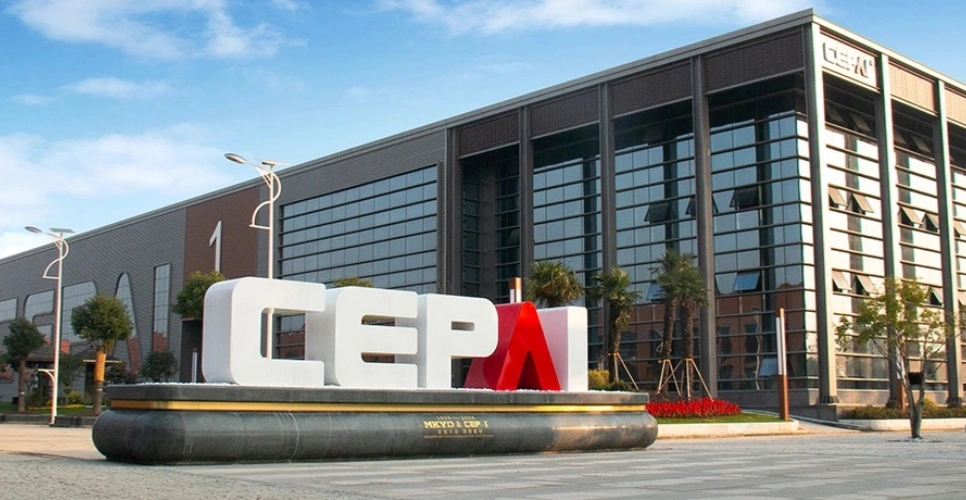
CEPAI Group Co., Ltd., located at 333 Jianshe West Road in the Jinhu Economic Development Zone of Jiangsu Province, was established in January 2009 with a registered capital of 200 million yuan and a total plant area of 56,000 square meters. The company holds API Q1, API 6A, API 6D, API 16C, API 602, ISO 9001, ISO 14001, ISO 45001, and CE certifications, along with a CNAS nationally recognized laboratory, giving buyers confidence that each Pneumatic Bellows Control Valve is tested against rigorous international standards before it ships.
Manufacturing Scale and Engineering Resources
CEPAI operates a Jiangsu Province certified enterprise Technology Center, a Fluid Control Engineering Technology Research Center, and a High-Performance Fluid Control Device Engineering Research Center, reflecting genuine investment in material science and design innovation. This level of in-house engineering capability allows the company to tailor a Pneumatic Bellows Control Valve to unusual process conditions rather than offering a rigid, one-size-fits-all catalog product.
Proven Industry Track Record
CEPAI has obtained supplier qualification status with PetroChina, Sinopec, and CNOOC, along with China Datang Group, Baowu Group, China Huaneng, and Wanhua Chemical, among other major industrial organizations. These qualifications require extensive auditing of manufacturing and quality processes, offering strong evidence that CEPAI's valves, including the Pneumatic Bellows Control Valve, meet the demanding standards required by some of the world's most rigorous industrial buyers.
Conclusion
Choosing the right Pneumatic Bellows Control Valve requires matching materials, sealing performance, and reliability to your process. CEPAI's certified engineering makes it a dependable partner. Contact us to get started.
FAQ
Q1: What makes a Pneumatic Bellows Control Valve different from a standard control valve?
A: Its hermetically sealed bellows eliminates the stem leakage pathway found in conventional packed valves, providing zero-leakage performance for hazardous or high-purity media.
Q2: How do I determine the right Cv rating for my application?
A: Compare manufacturer-supplied Cv curves against your process flow diagram, accounting for both normal operating flow and occasional upset conditions.
Q3: Is a Pneumatic Bellows Control Valve suitable for high-temperature chemical processing?
A: Yes, with appropriate body, trim, and bellows materials selected for the specific temperature and chemical exposure involved.
Q4: Does the bellows design require special maintenance?
A: It requires less routine maintenance than packed valves, since there is no packing to adjust, though periodic inspection is still recommended for long-term reliability.
Q5: Can CEPAI customize a Pneumatic Bellows Control Valve for specific process conditions?
A: Yes, CEPAI's in-house engineering and research centers allow the valve to be tailored to material, pressure, and temperature requirements unique to your application.
Ready to Specify Your Pneumatic Bellows Control Valve? Contact CEPAI Now
If your project demands leak-free, precise flow control for hazardous or high-purity applications, CEPAI's certified manufacturing and engineering expertise can help you select the right Pneumatic Bellows Control Valve for your process. Our team can provide material recommendations, Cv sizing support, and technical documentation tailored to your specific pressure, temperature, and chemical exposure requirements. Reach out today to discuss your project and receive a customized quotation. Contact us directly at cepai@cepai.com and let CEPAI help you achieve safer, more reliable process control.

Get professional pre-sales technical consultation and valve selection services, customized solution services.
About CEPAI
Popular Blogs