How Does a Small Size Electric Rubber Lined Butterfly Valve Work?
The small size electric rubber lined butterfly valve provides dependable shutdown and flow control for smaller-diameter pipelines transporting water, wastewater, chemicals, and other corrosive media. This valve has a compact, lightweight body with an integrated rubber lining and an electric actuator. The rubber connected to the valve body acts as a sealing surface as well as a corrosion barrier. The electric actuator allows for accurate and repeatable placement without the need to install compressed air infrastructure. In this article, how this kind of valve is made and the combination of its rubber lining and disk shape to provide tight bidirectional sealing are discussed, along with popular applications for water treatment, chemical processing, and industrial pipe systems.
Basic Construction of a Small-Size Electric Rubber-Lined Butterfly Valve
Understanding the physical components of this valve type provides the foundation for appreciating how it achieves reliable sealing performance in smaller pipeline diameters.
Valve Body and Rubber Lining
The body of the small-size electric rubber-lined butterfly valve is normally made of ductile iron or cast steel, and the vulcanized rubber lining is immediately attached to the interior surface of the body during the production process. This liner, often composed of either EPDM or NBR depending on the medium being handled, runs the whole inside diameter and functions as a flange gasket at the two connecting locations, avoiding the need for separate gaskets. The lining is molecularly linked, not mechanically joined. There is no space between the lining and the body where corrosive media may build up and destroy the underlying metal body. This integrated structure is a distinctive feature that distinguishes rubber-lined butterfly valves from ordinary metal-seated variants in less corrosive usage.
Disc Design and Centric Configuration
Most all of the small size electric rubber-lined butterfly valve types employ a centric, or concentric, disk design. In a centric design, the shaft goes straight between the center of the disk and the pipe centerline. As the disk spins against the rubber-lined bore, the lining compresses slightly at the edge of the disk, ensuring a continuous, gap-free seal in either flow direction. This concentric shape simplifies the mechanical design and cost, which is especially favorable for lower nominal pipe diameters where more complicated eccentric geometries would add additional expense without a commensurate performance gain. The contact of the disk against the lining is simple and makes the valve easy to check and maintain throughout its service life.
Electric Actuator Components
The electric actuator on a small-size electric rubber-lined butterfly valve generally comprises a motor, reduction gearing, and a control module that interprets an electrical signal into accurate rotational movement of the valve stem. Most versions also provide a local location indicator, manual override capabilities for emergency operation, and digital communication options, including Modbus for interaction with plant control systems. Installation is simplified in facilities without instrument air infrastructure, and as the actuator is not dependent on compressed air, the valve may be located in distant or difficult-to-access places without extending pneumatic supply lines. The self-contained valve actuation is especially well suited for smaller dispersed pipe networks typical of water and wastewater systems.
How the Valve Achieves Reliable Sealing and Flow Control
With the basic construction established, the next step is to examine exactly how the rubber lining and disc geometry combine to deliver dependable sealing performance.
Rubber Lining as an Integrated Seal
One of the unique features of a small size electric rubber lined butterfly valve is that it does not have a separate elastomeric seat ring but utilizes the whole of the interior lining as the sealing surface, so the disk contacts a continuous resilient layer all the way round the circle. This design gives great flexibility for modest manufacturing errors between the disk and body, since the rubber may contract slightly to cover small gaps that might otherwise lead to leakage in a rigid metal-seated design. The good adherence of the vulcanized rubber to the metal substrate assures that the lining will stay firmly connected after repeated cycles and will not peel or delaminate, as might be the case with inferior-grade mechanically attached liners.
Disc Rotation and Flow Regulation
The electric actuator turns the disc along its ninety-degree stroke. A small-size electric rubber-coated butterfly valve operates smoothly from completely closed to fully open. Intermediate positions are used for proportional flow control for throttling applications. The disk profile is designed for optimum flow characteristics, minimizing turbulence and energy losses as the fluid travels past the partly open valve. The ability to act as an isolation valve and a flow-controlling device allows the operator flexibility in smaller pipe systems where separate isolation and control valves would add unneeded expense and complexity to the overall system design.
Bidirectional Tight Shutoff
Properly constructed small-size electric rubber-lined butterfly valves will have tight shutoff in any flow direction since the rubber lining seals evenly around the disk, whether the pressure is being applied from the upstream or downstream side. This bidirectional capacity makes the valve ideal for applications with reversible flow, such as some water distribution networks or batch processing systems where the flow direction could change throughout various operating periods. Typically, the valve may also be used as an end-of-line valve against full operating pressure with a blind flange, further illustrating the sealing confidence inherent in the completely lined body design used throughout this valve family.
| Sealing Feature | Function |
|---|---|
| Vulcanized Rubber Lining | Acts as both a seal and a corrosion barrier, doubles as a flange gasket |
| Centric Disc Design | Provides simple, cost-effective sealing for smaller diameters |
| Bidirectional Sealing | Maintains tight shutoff regardless of flow direction |
| Electric Actuator | Delivers precise positioning without compressed air |
Performance Benefits for Small-Diameter Applications
Beyond the basic sealing mechanism, several performance characteristics explain why this valve type is particularly well suited to smaller pipeline diameters.
Corrosion and Wear Resistance
The rubber lining in a small-size electric rubber-lined butterfly valve provides substantial protection against corrosion by completely isolating the metal body from contact with the process media. This is particularly valuable in water treatment, desalination, and chemical processing applications where the fluid would otherwise attack unprotected metal surfaces over time. The lining also resists abrasive wear from particulates suspended in the flow, extending the valve's service life compared with unlined alternatives exposed to the same aggressive media. This combination of corrosion and wear resistance significantly reduces the frequency of valve replacement, lowering long-term maintenance costs for facilities handling challenging fluids.
Compact Size and Lightweight Design
Because a small-size electric rubber-lined butterfly valve is designed for smaller nominal pipe diameters, its overall footprint and weight remain considerably lower than larger valve types, simplifying installation and reducing the structural support requirements on the surrounding piping. This compact profile is especially valuable in retrofit projects or space-constrained facilities where larger valve bodies would be impractical to install. The wafer or lug-style body common to this valve family further reduces face-to-face dimensions compared with flanged alternatives, allowing engineers to specify a solution that fits efficiently within existing piping layouts without requiring significant modification to adjacent infrastructure.
Precise Electric Control
The electric actuator paired with a small-size electric rubber-lined butterfly valve delivers accurate, repeatable positioning that supports both simple on/off isolation and more nuanced flow modulation duties. Digital feedback from the actuator allows operators to confirm valve position remotely, supporting integration with SCADA or building management systems common in water and wastewater facilities. This precision, combined with the elimination of compressed air dependency, makes electric actuation an increasingly popular choice for smaller valves distributed across wide geographic areas, where maintaining pneumatic infrastructure across every valve location would be costly and operationally complex.
Applications and Selection Guidance
Understanding where this valve type performs best and how to select the right configuration helps engineers specify the correct solution for their process.
Typical Industries and Media
Small size electric rubber lined butterfly valves are commonly used in municipal water and wastewater treatment plants, desalination plants, and chemical processing lines with mild to moderate corrosive fluids. It is also used in power plant auxiliary systems and in ordinary industrial pipelines when smaller-diameter isolation and control points are required. This valve family is suitable for a variety of downstream sectors where corrosion resistance and low-cost automation are important. The rubber lining is compatible with a wide range of media such as tap water, treated wastewater, or diluted chemical solutions.
Choosing the Right Lining Material
The selection of lining material is of paramount importance for a small-size electric rubber-lined butterfly valve, since the various elastomers have distinct ranges of temperature and chemical compatibility. EPDM lining generally has a broader temperature range and strong resistance to water, certain alcohols, and diluted inorganic acids. NBR lining is commonly selected for oils or hydrocarbon compounds with low aromatic content. The specification of the lining should only be finalized after the process fluid composition, the anticipated temperature range, and any intermittent exposure to alternative media have been confirmed by the engineers, since the wrong choice of material may considerably decrease the estimated service life of the valve.
Installation and Maintenance Tips
Proper installation of a small-size electric rubber-lined butterfly valve is the key to good sealing. This involves checking that the flange faces are clean and free of debris since the rubber lining also acts as the flange gasket and needs a smooth mating surface. Operators should also frequently evaluate the liner for wear, swelling, or surface cracking, especially with applications subject to variable chemical concentrations. It is often easy to maintain an actuator, usually just requiring periodic checks of positional accuracy and the ability to manually override the actuator in the event of power failure. The suggested maintenance plan by the manufacturer will assist in guaranteeing that the valve will continue to provide dependable sealing performance over the projected operating life.
| Selection Factor | Consideration |
|---|---|
| Lining Material | EPDM for water/diluted acids, NBR for oils and hydrocarbons |
| Temperature Range | Confirm compatibility with process operating temperature |
| Media Compatibility | Verify chemical composition against lining resistance data |
| Actuator Communication | Modbus or similar protocol for remote monitoring |
Why Choose CEPAI's Small Size Electric Rubber Lined Butterfly Valve
Manufacturing Strength and R&D Capability
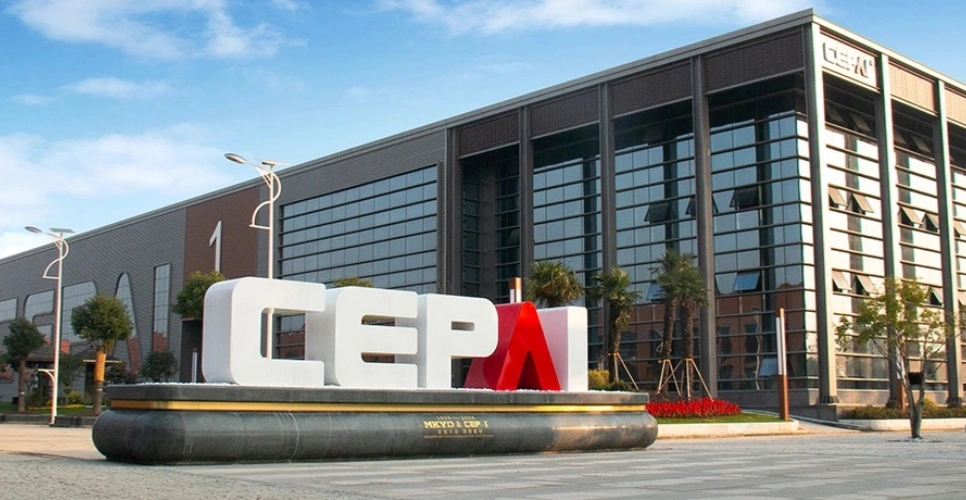
CEPAI Group Co., LTD. was founded in January 2009, with registered capital of 200 million yuan. The company has a 56,000-square-meter manufacturing plant, situated at 333 Jianshe West Road, Jinhu Economic Development Zone of Jiangsu Province. CEPAI is a national high-tech enterprise focusing on wellhead devices, pipeline valves, and regulating valves. The Fluid Control Engineering Technology Research Center and High-Performance Fluid Control Device Engineering Research Center of CEPAI engineer robust products, such as small-sized electric rubber-lined butterfly valves. This engineering depth enables the business to develop perfectly bonded rubber linings for harsh water treatment and chemical processing settings.
Certifications and Quality Standards
All our CEPAI small-sized electric rubber-lined butterfly valves are backed up by a wide range of certifications, including API Q1, API 6A, API 6D, API 16C, ISO 9001, ISO 14001, ISO 45001, ISO 3834, ISO 17025, CE, and PED. These certifications demonstrate that the design, fabrication, and testing techniques match the worldwide standards of quality that are sought after by major oilfield service businesses and engineering organizations. An in-house verification is also available via a CNAS-recognized laboratory, which tests the sealing performance, lining adhesion, and actuator precision of every small-sized electric rubber-lined butterfly valve sent to a client prior to field service.
Trusted by Major Industry Players
CEPAI is an approved supplier for PetroChina, Sinopec, and CNOOC and has cooperative relationships with China Datang Group, Baowu Group, China Huaneng, Wanhua Chemical, and Yulong Petrochemical. The firm was named the national specialized and unique new small giant enterprise and the Mayor Quality Award winner, with a coordinated supply chain comprising upstream casting and forging suppliers, midstream valve manufacturers, and downstream application partners such as China Guodian. Engineers may select CEPAI’s small-size electric rubber-lined butterfly valve for demanding corrosive-service applications with confidence, thanks to its established track record across petrochemical, power, and metallurgy industries.
Conclusion
Compact electric small-size rubber-lined butterfly valve in a tiny size for use in smaller diameter pipeline applications. Its two-way tight shutdown, wear resistance, and no need for compressed air make it a sensible option in water treatment, chemical processing, and general industrial uses. Selecting a valve that is correctly built and manufactured by an experienced, qualified manufacturer like CEPAI will assure long term dependability and corrosion prevention. Engineers designing a new smaller-diameter isolation or control point should carefully consider lining compatibility before choosing this sort of valve.
FAQ
Q1: What is the purpose of the rubber lining in this valve type?
It serves as both the sealing surface and a corrosion barrier, while also functioning as the flange gasket.
Q2: Does this valve provide tight shutoff in both flow directions?
Yes, the full-lining design allows the valve to seal uniformly regardless of upstream or downstream flow direction.
Q3: Why choose electric actuation over pneumatic for smaller valves?
Electric actuation eliminates the need for compressed air infrastructure, simplifying installation in remote locations.
Q4: What lining material should I choose for my application?
EPDM suits water and diluted acids, while NBR is preferred for oils and hydrocarbon-based media.
Q5: What industries commonly use this valve type?
Water treatment, desalination, chemical processing, and general industrial piping frequently use it for reliable isolation.
Get a Quote for CEPAI's Small Size Electric Rubber Lined Butterfly Valve Today
Looking for a corrosion-resistant, precisely controlled small size electric rubber lined butterfly valve for your smaller-diameter water, wastewater, or chemical piping system? CEPAI's engineering team can help you select the right lining material, disc configuration, and actuator setup for your specific process conditions. Backed by API, ISO, and CE certifications, our valves are trusted by major oilfield and industrial companies worldwide. Contact our sales engineers today at sales@cepai.com to request technical documentation, discuss your application requirements, or receive a competitive quote for your upcoming project.

Get professional pre-sales technical consultation and valve selection services, customized solution services.
About CEPAI
Popular Blogs