Adjustable Electric Three-eccentric Butterfly Valve vs. Ball Valve
The choice of using an electric three-eccentric adjustable electric three-eccentric butterfly valve or a ball valve affects the performance of a pipeline system, including sealing, control, and long-term maintenance. Both kinds of valves are often used for on/off and throttling operations in oil and gas, power, and petrochemical plants, although their internal geometry, torque properties, and size profiles are quite different. Three-eccentric butterfly valve with offset disk and cone-shaped seat for tight, low-friction shutdown. Ball valve with revolving spherical bore pushed against seat rings on both sides. In this article, we evaluate the way each valve seals, its performance under pressure, and how it fits into common industrial applications to assist engineers in choosing the technology that best suits their particular process needs.
Core Design and Working Principles
Understanding how each valve achieves shutoff is the starting point for any meaningful comparison, since the sealing mechanism drives nearly every other performance difference discussed later.
How a Three-Eccentric Butterfly Valve Seals
The electric three-eccentric butterfly valve, adjustable, seals by three offsets integrated into the geometry of the disk and stem. The first offset shifts the shaft behind the disk face, the second shifts the shaft centerline away from the pipe centerline, and the third tilts the seat cone axis away from the shaft centerline. The offsets in combination enable the disk to revolve into the seat with essentially little rubbing contact until the penultimate instant of closure, at which time a uniform, friction-free compression seal is created around the whole circle. This design reduces the wear on the sealing surfaces such that the valve may be cycled several times while maintaining a tight shutdown with a comparatively low closing torque relative to typical centerline butterfly designs.
How a Ball Valve Seals
A ball valve is sealed by turning a spherical or partial-sphere bore through ninety degrees from completely open to fully closed, with resilient or metal seat rings placed on the ball surface on both the upstream and downstream sides. The valve provides good bidirectional shutdown with the seats in constant contact with the ball during rotation and is frequently bubble-tight with zero-leakage performance in well-maintained installations. However, this constant seat-to-ball contact also leads to more friction in operation than the almost frictionless closing motion of an adjustable electric three-eccentric butterfly valve, which can impact actuator sizing and long-term seat wear, particularly in high-cycle or abrasive service conditions where sustained contact increases degradation.
Adjustability and Electric Actuation
The term “adjustable” means that the valve can control flow through a range of positions, rather than simply being fully open or fully closed. The term “electric” refers to the fact that the actuator is powered by a motor, so that the stem can be positioned precisely and repeatably. This adaptability makes the valve suitable for use as both an isolation valve and a throttling control device, which is a flexibility not generally seen with regular ball valves that are typically designed for pure on/off usage. Electric actuation eliminates the requirement for compressed air infrastructure and provides digital feedback and interaction with plant management systems. The electric three-eccentric butterfly valve is suitable for facilities where remote monitoring and flow adjustment are a priority.
Performance Comparison
With the sealing principles established, the next step is to examine how each valve type actually performs across the metrics engineers care about most: leakage, torque, and flow characteristics.
Sealing Performance and Leakage Class
Both kinds of valves may provide good shut-off; however, the actual leakage class is very much dependent on the seat material and manufacturing accuracy. A well-built adjustable electric butterfly valve with a metal or composite seat may achieve Class V or Class VI shutdown ratings, similar to many ball valve designs, but with higher resistance to thermal cycling owing to its low-friction closing action. Ball valves, especially those with soft seats, tend to provide more constant zero-leakage performance across a broader range of pressures. Metal-seated ball valves in high-temperature use usually allow somewhat looser tolerances. The decision between the two frequently comes down to whether bidirectional zero leakage or less seat wear is the greater priority for the particular application.
Operating Torque and Actuator Sizing
The three-eccentric geometry virtually eliminates rubbing friction for most of the rotation, so an adjustable electric three-eccentric butterfly valve typically requires significantly less operating torque than a comparably sized ball valve, permitting smaller, more cost-effective electric actuators. In contrast, ball valves have continuous contact between the seats during rotation, which increases the torque required to overcome the friction, particularly with bigger diameters or greater pressure services. This torque advantage translates directly into cheaper actuator costs, decreased power consumption and a smaller footprint for the butterfly valve choice, an increasingly essential feature as pipe diameter increases and the cost of bigger actuators also increases proportionally.
Pressure Drop and Flow Regulation Capability
An electric three-eccentric butterfly valve with an adjustable disk is often more suitable for modulating or throttling service because the disk may be set at intermediate angles to provide a regulated and predictable pressure decrease throughout a broad flow range. Ball valves, especially full-port types, are tuned for low pressure drop while completely open but sometimes have less predictable flow characteristics when partly open; hence, they are less appropriate for precision control duty. V-port or characterized ball valves may help with this but increase expense and complexity. However, in cases where true flow control instead of just isolation is needed, the adjustable electronic three-eccentric butterfly valve will generally be a more natural and cost-efficient solution.
| Performance Factor | Three-Eccentric Butterfly Valve | Ball Valve |
|---|---|---|
| Operating Torque | Lower, due to near-frictionless closing | Higher, due to continuous seat contact |
| Leakage Class | Class V–VI achievable with proper seats | Often zero-leakage, especially soft-seated |
| Flow Regulation | Well suited to throttling | Best for on/off, limited modulation |
| Actuator Size/Cost | Smaller, lower cost | Larger for equivalent line size |
Material, Size, and Weight Considerations
Beyond sealing and torque, the physical footprint and material makeup of each valve significantly affect installation cost and long-term maintenance planning.
Construction Materials and Temperature Range
A popular design of an adjustable electric three-eccentric butterfly valve is made with a carbon steel or stainless steel body, a seat made from metal or reinforced composite, and a disk that is covered with wear-resistant materials to survive repeated cycling. Depending on the seat material used, the design permits the valve to be used throughout a broad temperature range from cryogenic service to several hundred degrees centigrade. Ball valves are manufactured with identical body materials but tend to require more polymer seat materials such as PTFE or PEEK for soft-seated designs, which restricts their maximum service temperature relative to metal-seated triple-eccentric butterfly valves. In many severe temperature applications, the material flexibility of the butterfly valve design allows a wider effective working window.
Size and Weight Differences
For larger pipe diameters, an adjustable electric 3-eccentric butterfly valve is often much lighter and smaller than a comparable ball valve, since the wafer or lug-style butterfly body uses less material than a full-bore ball valve housing. The weight advantage decreases installation costs, eases pipe support requirements, and lowers transportation costs, especially for large diameter transmission lines. However, ball valves are preferred for smaller sizes because of their compact and robust design and ease of installation. But for larger pipe sizes, the weight and cost of ball valves increase significantly, so the adjustable electric three-eccentric butterfly valve is more economical for large-bore applications.
Maintenance and Serviceability
Routine maintenance of the adjustable electric three-eccentric butterfly valve normally includes checking the wear and tear of the seat and disk coating, the integrity of the stem packing, and the calibration of the electric actuator to ensure that it is maintained accurately over time. The low-friction closing motion results in less seat wear. Consequently, maintenance intervals are frequently greater than those for ball valves under similar cycle settings. Constant contact causes wear on ball valves, and seats may need replacing from time to time, although the simpler internal geometry makes disassembly and reseating easier in smaller sizes. Facilities that are concerned about long-term maintenance costs frequently like the decreased wear profile of the butterfly valve type for high-cycle or constantly modulating duty.
| Consideration | Three-Eccentric Butterfly Valve | Ball Valve |
|---|---|---|
| Weight (Large Diameter) | Lighter, more compact | Heavier, bulkier body |
| Temperature Range | Broad, metal-seated options available | Often limited by polymer seat materials |
| Maintenance Frequency | Lower due to reduced seat wear | Higher due to continuous seat contact |
| Best Fit | Large-diameter, throttling service | Small-to-mid diameter, tight shutoff |
Application Fit and Selection Guide
Matching the right valve to the right process depends on evaluating flow requirements, pipe size, and shutoff priorities together rather than in isolation.
Best Applications for the Butterfly Valve
An adjustable electric three-eccentric butterfly valve performs particularly well in large-diameter pipeline isolation, water and wastewater treatment, power plant cooling water systems, and applications requiring both tight shutoff and flow modulation in a single device. Its combination of low torque, compact size, and electric actuation also makes it attractive for remote or unmanned installations where minimizing actuator size and eliminating compressed air dependency are priorities. Petrochemical and metallurgy facilities frequently specify this valve type for large-bore process lines where the weight and cost savings compared with an equivalent ball valve become increasingly significant as pipe diameter grows.
Best Applications for Ball Valves
Ball valves remain the preferred choice for smaller-diameter, high-pressure isolation duties where absolute zero-leakage shutoff is critical, such as wellhead safety systems, gas distribution lines, and chemical injection points. Their robust, compact design also suits applications with limited installation space, since the full-bore design minimizes pressure drop when fully open. For simple on/off service without a strong requirement for flow modulation, a ball valve often provides a straightforward, cost-effective solution, particularly in smaller nominal pipe sizes where the torque and weight disadvantages compared with a butterfly valve become less significant.
How to Choose Between the Two
Selecting between an adjustable electric three-eccentric butterfly valve and a ball valve ultimately depends on pipe diameter, required flow control capability, temperature range, and long-term maintenance priorities. For large-bore lines requiring both isolation and throttling, the butterfly valve's lower torque, lighter weight, and modulating capability generally make it the more practical and economical choice. For smaller, high-pressure isolation points demanding absolute zero leakage, a ball valve remains the more established solution. Engineers should evaluate total lifecycle cost, including actuator sizing and expected maintenance frequency, rather than initial purchase price alone when making this determination.
Why Choose CEPAI's Adjustable Electric Three-eccentric Butterfly Valve
Manufacturing Strength and R&D Capability
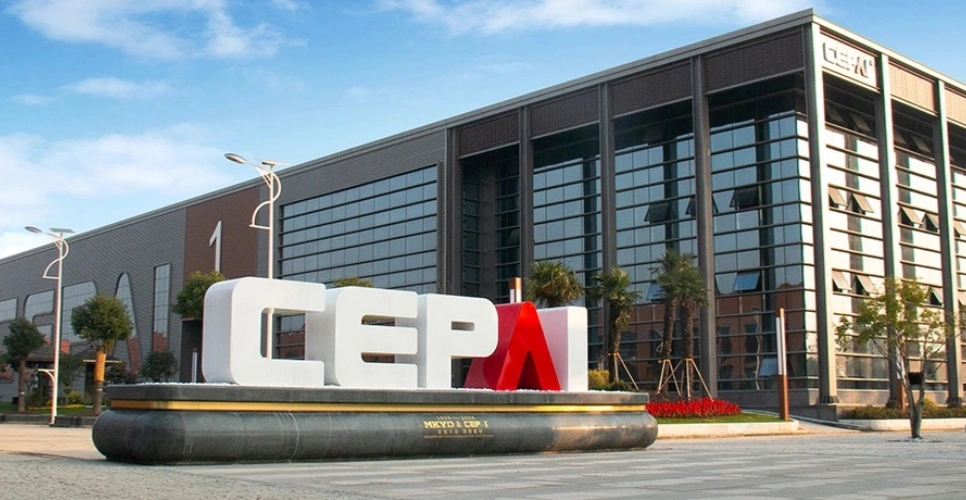
CEPAI Group Co., LTD. Address: No. 333 Jianshe West Road, Jinhu Economic Development Zone, Jiangsu Province. Established in January 2009, registered capital of 200 million yuan, manufacturing area of 56000 square meters. CEPAI is a national high-tech enterprise specializing in wellhead devices, pipeline valves, regulating valves, and uses its Fluid Control Engineering Technology Research Center and High-Performance Fluid Control Device Engineering Research Center to design precision products such as the adjustable electric three-eccentric butterfly valve. This technical depth enables the business to produce the offset disk and cone-seat geometry to the precise tolerances needed to provide dependable, low-friction, long-cycle sealing performance.
Certifications and Quality Standards
Every CEPAI adjustable electric three-eccentric butterfly valve is covered by a wide array of certifications such as API Q1, API 6A, API 6D, API 16C, ISO 9001, ISO 14001, ISO 45001, ISO 3834, ISO 17025, CE, and PED. These qualifications certify that design, welding, and testing techniques satisfy internationally recognized quality standards required by major oilfield service businesses and engineering organizations. A CNAS-accredited laboratory provides additional in-house testing, assuring that each adjustable electric three-eccentric butterfly valve sent to a client has been tested for sealing performance, torque accuracy, and actuator responsiveness before entering field operation.
Trusted by Major Industry Players
CEPAI is an approved supplier for PetroChina, Sinopec, and CNOOC and has cooperative relationships with China Datang Group, Baowu Group, China Huaneng, Wanhua Chemical, and Yulong Petrochemical. It was designated a national specialized and unique new small gigantic firm and a recipient of the Mayor Quality Award. It unites upstream casting and forging suppliers, midstream valve manufacturing, and downstream application partners such as China Guodian to provide a coordinated supply chain. CEPAI’s three-eccentric electric butterfly valve with adjustable design is trusted by engineers to use in demanding isolation and flow-control applications, with proven performance in petrochemical, power, and metallurgy industries.
Conclusion
Both the adjustable electric three-eccentric butterfly valve and the ball valve have reliable sealing. But each has its own advantages under different conditions. The butterfly valve has lower torque, less weight, and true throttling capabilities, making it excellent for big diameters and modulating duty. The ball valve remains a good option for tiny, high-pressure isolation sites where absolute zero leakage is needed. The choice relies on pipe size, flow control demands, and lifetime maintenance objectives. Working with a recognized and experienced manufacturer like CEPAI guarantees that engineers choose the proper valve technology and design for long-lasting and reliable pipeline performance.
FAQ
Q1: What makes the three-eccentric design different from a standard butterfly valve?
Three offsets in the shaft and seat geometry create a nearly frictionless closing motion, reducing wear and required torque.
Q2: Can this valve be used for flow modulation, not just isolation?
Yes, the "adjustable" design allows precise positioning across the stroke, making it suitable for throttling service.
Q3: Is a ball valve more leak-tight than a butterfly valve?
Soft-seated ball valves often achieve zero leakage more consistently, though metal-seated triple-eccentric designs come close.
Q4: Why does the butterfly valve need a smaller actuator than a ball valve?
Its low-friction closing motion requires less torque, allowing for smaller, more cost-effective electric actuators.
Q5: Which valve is better for large-diameter pipelines?
The adjustable electric three-eccentric butterfly valve is typically lighter, more compact, and more economical at large sizes.
Get a Quote for CEPAI's Adjustable Electric Three-Eccentric Butterfly Valve Today
Trying to decide between an adjustable electric three-eccentric butterfly valve and a ball valve for your next project? CEPAI's engineering team can help you evaluate torque, sealing class, and flow modulation requirements to select the right solution for your pipeline. Backed by API, ISO, and CE certifications, our valves are trusted by major oilfield and power generation companies worldwide. Contact our sales engineers today at sales@cepai.com to request technical documentation, discuss your application requirements, or receive a competitive quote for your upcoming project.

Get professional pre-sales technical consultation and valve selection services, customized solution services.
About CEPAI
Popular Blogs