How Does a Pneumatic Vacuum Butterfly Valve Improve Sealing?
A pneumatic vacuum butterfly valve is designed to provide airtight isolation and accurate flow control in systems where even small leakages might jeopardize the integrity of processes. They are used in vacuum distillation columns, degassing units, and other industrial systems at low pressure. Unlike normal butterfly valves, which are meant to operate at atmospheric or positive pressure, a vacuum-rated version relies on specific seal geometry, self-centering disks, and strictly regulated manufacturing tolerances to exclude air intrusion at various vacuum levels. In this article, we will discuss design features that give a pneumatic vacuum butterfly valve its superior sealing performance, how the pneumatic actuator provides fast and repeatable operation, and typical applications of this type of valve in petrochemical, power, and general processing facilities.
Core Design of a Pneumatic Vacuum Butterfly Valve
Before examining sealing performance in detail, it is useful to understand the physical components that distinguish this valve type from conventional butterfly valves used in standard pressure service.
Valve Body and Disc Configuration
For continued vacuum duty, the body of a pneumatic vacuum butterfly valve is usually machined from stainless steel for the dimensional stability and corrosion resistance necessary. The disk or throttle plate is precisely balanced and is frequently constructed with a little off-center pivot point in relation to the seal so it may self-align when it closes on the seat. This design provides a uniform contact pressure across the whole periphery of the seal, which is necessary for the very low leak rates required in vacuum applications. Precision of manufacture is of much more importance in a pneumatic vacuum butterfly valve than in a valve for normal atmospheric or positive-pressure use. Any dimensional deviation in the disk or body may produce a local leak channel.
Sealing Elements and Materials
The sealing effectiveness of a pneumatic vacuum butterfly valve is strongly dependent on the material and shape of the annular seal situated between the disk and the valve body. For chemical resistance, elasticity, and the capacity to maintain a tight seal throughout a broad temperature range, fluoroelastomer materials such as Viton are often used, while PTFE or metal seats may be chosen for more severe chemical or high-temperature conditions. Usually, the inner diameter of the seal is made slightly smaller than the disk so that the disk can compress the seal evenly as it turns to the closed position. The precise matching of seal material and design is crucial to how the valve achieves the exceptionally low leak rates necessary in rigorous vacuum duty.
Pneumatic Actuation Mechanism
A pneumatic vacuum butterfly valve often employs a solenoid-controlled directional valve to provide compressed air to a double-acting or single-acting cylinder, which spins the disk between open and closed positions via a shaft attached to it. The pneumatic actuation enables quick and consistent cycling, useful for applications needing frequent isolation or rapid reaction to changing vacuum conditions. Many variants additionally include an electro-pneumatic positioner, which accepts a 4-20 mA input, enabling the valve to modulate position for more accurate flow control, instead of just on/off. The rapid response of the valve and the continuous closing force ensure that the sealing performance is the same from cycle to cycle, which is necessary for long-term vacuum integrity.
How Sealing Performance Is Achieved
With the physical design established, the next step is understanding the specific mechanisms that allow this valve type to achieve such low leak rates compared with conventional designs.
Soft Seal vs Metal Seal Sealing Mechanism
A pneumatic vacuum butterfly valve may be fitted with either a soft elastomeric seal or a metal-to-metal sealing mechanism, depending on the process temperature and chemical compatibility requirements. Soft-seated designs provide good sealing at a lower cost by using the flexibility of the seal material to wrap closely around the disk surface. Soft-seated designs are particularly suited to mild-temperature vacuum applications. Metal-seated designs are more costly to construct but operate better in high-temperature or chemically hostile settings where elastomers would disintegrate over time. When designing a pneumatic vacuum butterfly valve for guaranteed long-term vacuum integrity, one of the most essential considerations is selecting a suitable sealing configuration for the given process circumstances.
Leak Rate and Vacuum Integrity
The main performance index of a pneumatic vacuum butterfly valve is the leak rate, which is usually expressed in units such as Pa·L/s, with high-quality designs having leak rates as low as 1.0×10⁻⁶ Pa·L/s in helium leak testing. The very low leak rate guarantees that the valve will preserve the vacuum system’s integrity even after many open-close cycles, crucial in procedures where even a little air infiltration might disturb the reaction conditions or contaminate sensitive materials. This performance is normally confirmed by the manufacturer by conducting specialized helium leak testing prior to shipping the valve to provide verified confidence that the sealing design is adequate for the demanding needs of vacuum distillation, degassing, and other industrial operations at low pressures.
Self-Centering and Floating Disc Design
Most modern designs for pneumatic vacuum butterfly valves have a self-centering or “floating” disk design, in which the throttle plate is not firmly attached to the shaft but is permitted to move laterally to correct its position relative to the seal as it closes. This floating movement compensates for slight manufacturing errors or different thermal expansions and makes sure that the disk sits properly throughout its full circumference, instead of the contact pressure being unevenly distributed. This self-centering is usually achieved by spring elements, which maintain a constant sealing force. This design improvement is among the fundamental technical improvements that differentiate purpose-built vacuum butterfly valves from ordinary industrial butterfly valves suited for lower-vacuum duty.
| Sealing Feature | Function |
|---|---|
| Fluoroelastomer/PTFE Seal | Provides elasticity and chemical resistance for tight closure |
| Self-Centering Disc | Compensates for tolerances to ensure even seal contact |
| Metal Seat Option | Supports high-temperature or chemically aggressive service |
| Helium Leak Testing | Verifies the leak rate before the valve leaves the factory |
Performance Advantages Over Conventional Valves
Beyond sealing precision, several additional performance characteristics explain why engineers specify this valve type for demanding vacuum-service applications.
Fast, Repeatable Actuation
A pneumatic vacuum butterfly valve is actuated by compressed air instead of manual or slower electric actuation and may cycle from fully open to closed in a fraction of a second. This is useful in operations that need fast isolation under upset situations or frequent batch cycling. This speed does not affect sealing accuracy as the pneumatic cylinder provides uniform closing force in each cycle, ensuring the same leak-tight performance across thousands of operations. For facilities that operate continuous vacuum operations and have routine isolation needs, the speed and repeatability offered by pneumatic actuation are clearly advantageous compared to slower, less consistent options.
Wide Temperature and Pressure Range
A well-designed pneumatic vacuum butterfly valve will generally perform reliably in a working temperature range of -50° to +150°C, and pressures from very low vacuum to moderate positive pressure, depending on the choice of seal material. This wide working environment enables a single valve platform to be used across different process conditions within the same facility, without requiring numerous specialist valve types. This versatility is supported by a stainless steel body construction, which offers corrosion resistance for the wide range of process gases and liquids found in petrochemical, power, and industrial gas handling applications requiring vacuum conditions combined with variable temperature requirements.
Low Maintenance and Long Service Life
The self-centering disk design and the high-quality seal materials used in a pneumatic vacuum butterfly valve are conducive to an extended service life and decreased maintenance needs compared to valves not particularly designed for vacuum use. The seal design eliminates wear irregularities around the seal perimeter, enabling the valve to retain its specified leak rate for more running cycles before the seal requires replacement. Routine inspection involves checking that the actuator is supplied with air and that the seal is free from contamination or damage. The durability and predictability of maintenance intervals make the valve a cost-viable long-term investment for facilities with continuous vacuum operations.
Applications and Selection Considerations
Understanding where this valve type is deployed and how to select the right configuration helps engineers make informed specification decisions for their specific process.
Typical Industrial Applications
A pneumatic vacuum butterfly valve is commonly used in vacuum distillation columns, degassing systems, and vapor recovery units across petrochemical and refining operations, where maintaining precise vacuum levels directly affects product quality and yield. Power generation facilities also use vacuum-rated valves in condenser and deaerator systems, while industrial gas processing plants rely on them for isolation duties in low-pressure piping networks. Across these applications, the valve's combination of tight sealing, fast actuation, and broad temperature tolerance makes it a practical solution wherever vacuum integrity is a critical process requirement rather than an optional performance characteristic.
Selecting the Right Size and Sealing Material
Specifying the correct pneumatic vacuum butterfly valve requires evaluating the process vacuum level, temperature range, and chemical compatibility of the media being handled. Soft-seated fluoroelastomer designs are typically adequate for moderate vacuum and temperature conditions, while metal-seated configurations should be considered for higher-temperature or chemically aggressive processes where elastomer degradation is a concern. Pipe diameter and required Cv also influence actuator sizing, since larger valves demand proportionally greater cylinder force to achieve the same closing torque. Working closely with the manufacturer during this selection process helps ensure the finished valve assembly matches the actual vacuum and process conditions rather than a generic specification.
Installation and Maintenance Best Practices
Correct installation of a pneumatic vacuum butterfly valve includes verifying proper alignment between the valve and adjoining flanges to avoid introducing stress that could distort the seal, along with confirming the pneumatic supply line delivers consistent, moisture-free air to the actuator. Periodic inspection of the seal for signs of compression set or contamination helps maintain the valve's rated leak rate over time, and actuator cylinders should be checked periodically for smooth, consistent stroke performance. Because these valves often serve critical isolation duties within vacuum systems, many facilities include them in scheduled preventive maintenance programs to confirm continued sealing integrity across repeated operating cycles.
| Selection Factor | Consideration |
|---|---|
| Vacuum Level | Determines the required leak rate and seal precision |
| Temperature Range | Guides the choice between soft-seated and metal-seated designs |
| Media Compatibility | Fluoroelastomer, PTFE, or metal seal selection |
| Actuator Sizing | Larger diameters require greater cylinder force |
Why Choose CEPAI's Pneumatic Vacuum Butterfly Valve
Manufacturing Strength and R&D Capability
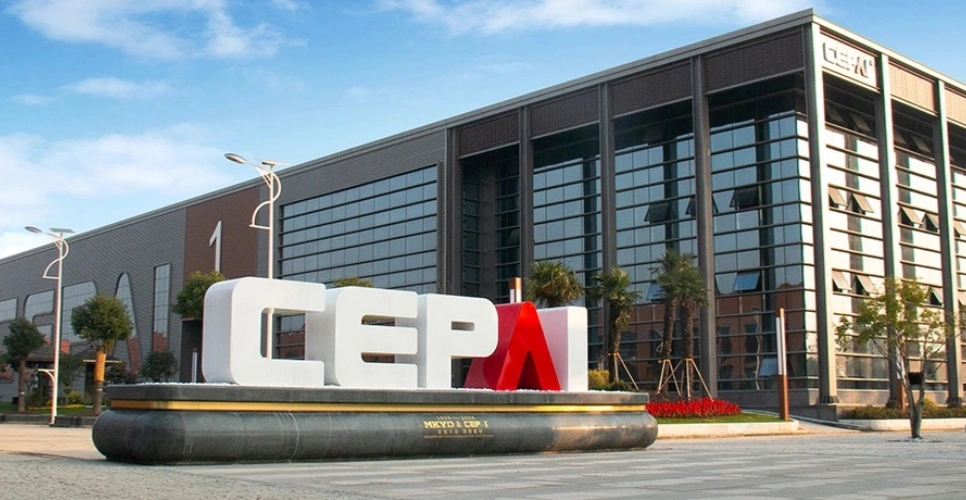
CEPAI Group Co., LTD. is headquartered at 333 Jianshe West Road, Jinhu Economic Development Zone, Jiangsu Province. It was incorporated in January 2009 with a registered capital of 200 million yuan and a manufacturing area of 56,000 square meters. CEPAI is a national high-tech enterprise. The main business includes wellhead devices, pipeline valves, and regulating valves. CEPAI applies the Fluid Control Engineering Technology Research Center and the High-Performance Fluid Control Device Engineering Research Center to the design of precision products such as pneumatic vacuum butterfly valves. This depth of engineering enables the business to fabricate self-centering disk assemblies and sealing components to the close tolerances necessary for dependable vacuum integrity.
Certifications and Quality Standards
Each pneumatic vacuum butterfly valve from CEPAI is manufactured with a wide range of certifications such as API Q1, API 6A, API 6D, API 16C, ISO 9001, ISO 14001, ISO 45001, ISO 3834, ISO 17025, CE, and PED. These certifications demonstrate that the design, welding, and testing techniques match the internationally recognized quality standards expected by the main oilfield service businesses and engineering firms. A CNAS-accredited laboratory also offers in-house verification, assuring that each pneumatic vacuum butterfly valve sent to a client has been verified for leak rate, actuator responsiveness, and sealing durability prior to field operation.
Trusted by Major Industry Players
CEPAI is an approved supplier for PetroChina, Sinopec, and CNOOC and has cooperative relationships with China Datang Group, Baowu Group, China Huaneng, Wanhua Chemical, and Yulong Petrochemical. The firm has been awarded as a national specialized & special new small gigantic enterprise and winner of the Mayor Quality Award. It has established a coordinated supply chain integrating upstream casting and forging suppliers, midstream valve manufacturers, and downstream application partners such as China Guodian. This established history in the petrochemical, power, and metallurgy industries enhances engineers’ trust when selecting CEPAI’s pneumatic vacuum butterfly valve for sensitive vacuum-isolation applications.
Conclusion
A pneumatic vacuum butterfly valve optimizes sealing by combining self-centering disk design, precisely matched seal materials, and precision pneumatic actuation that provides constant closing force over thousands of cycles. This technical technique permits the valve to achieve exceptionally low leak rates in challenging vacuum distillation, degassing, and industrial gas applications where ordinary butterfly valves would fail. Opting for a professionally certified valve from an experienced manufacturer such as CEPAI guarantees long-term vacuum integrity and dependable process performance. When defining this crucial component, engineers considering a new vacuum isolation point should consider sealing accuracy and material compatibility.
Contact our sales engineers today at sales@cepai.com to request technical documentation, discuss your application requirements, or receive a competitive quote for your upcoming project.
FAQ
Q1: What makes a pneumatic vacuum butterfly valve different from a standard butterfly valve?
It uses precision seal geometry, self-centering discs, and tighter manufacturing tolerances specifically designed to minimize leak rates.
Q2: What leak rate can this valve type achieve?
High-quality designs can reach leak rates as low as 1.0×10⁻⁶ Pa·L/s under helium leak testing.
Q3: What sealing materials are commonly used?
Fluoroelastomer or PTFE seals are common for moderate conditions, while metal seats suit high-temperature or aggressive media.
Q4: How fast does a pneumatic vacuum butterfly valve operate?
Pneumatic actuation typically allows full open-to-close cycling in a fraction of a second with consistent closing force.
Q5: Where is this valve type most commonly used?
Common applications include vacuum distillation, degassing systems, and low-pressure piping in petrochemical and power plants.

Get professional pre-sales technical consultation and valve selection services, customized solution services.
About CEPAI
Popular Blogs