Balanced Choke Valve: Working Principle, Structural Features and Applications
What Is a Balanced Choke Valve?
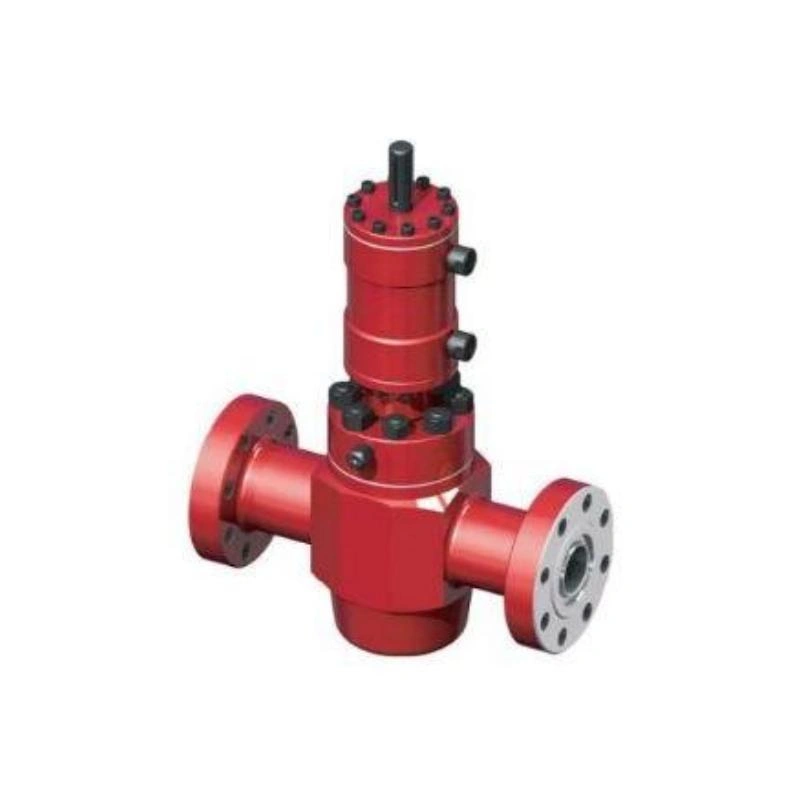
A balanced choke valve is a special type of industrial valve that integrates shut-off, throttling, and pressure regulation functions. It is widely used in oil and gas production systems, wellhead control equipment, oil and gas pipelines, and transportation stations.
During the operation of oil and gas transportation systems, sudden pump shutdowns may cause reverse flow of the medium, resulting in pressure fluctuations and potential equipment damage. A choke valve is used to control the flow rate and maintain system pressure stability.
By adjusting the opening position of the valve trim, the balanced choke valve can precisely control the flow area, allowing operators to achieve:
Reliable shut-off;
Accurate flow regulation;
Stable pressure control;
Smooth operation under high-pressure conditions.
With the continuous development of oil and gas exploration, especially in deep onshore fields and offshore applications, the requirements for choke valves have become increasingly strict, including:
Higher throttling accuracy;
Better sealing performance;
Lower operating torque;
Improved wear resistance;
Stronger corrosion resistance.
Therefore, the balanced choke valve, especially the bullet-type balanced choke valve design, has become an important control valve solution in the oil and gas industry.
Structure of a Balanced Choke Valve
A typical balanced choke valve consists of the following main components:
Valve body;
Valve seat;
Valve plug;
Valve stem;
Valve core shaft;
Valve sleeve;
Sealing rings;
Bonnet/support;
Stem nut;
Handwheel.
The valve body design, balancing mechanism, valve trim structure, and sealing system are the key factors affecting valve performance.
Main Structural Features of Balanced Choke Valve
Bullet-Type Streamlined Valve Body Design
The balanced choke valve usually adopts a bullet-shaped valve body structure.
The internal flow passage is designed with a streamlined horizontal structure, which improves flow efficiency and reduces turbulence. Reinforcing ribs are installed inside the valve body to enhance mechanical strength while maintaining smooth flow.
This design provides several advantages:
Reduced Flow Resistance
The streamlined internal passage minimizes pressure loss and reduces resistance during medium flow.
Improved Flow Capacity
The optimized flow channel increases the valve’s flow capacity, ensuring stable operation of the pipeline system.
Compact Structure and Lower Weight
Compared with conventional valves, the bullet-type design reduces internal space requirements, making the valve more compact and lowering manufacturing costs.
Conical or Parabolic Valve Plug Design
The valve plug is the key component responsible for shut-off and throttling control.
The valve plug head is generally designed with:
Conical shape;
Parabolic profile.
When the valve plug contacts the valve seat sealing surface:
The valve is fully closed and the medium flow is stopped.
When the valve plug moves away from the valve seat:
The flow passage opens gradually, allowing throttling and pressure adjustment.
This structure ensures reliable shut-off while providing accurate flow control performance.
Pressure Balancing Holes Reduce Operating Torque
One of the most important features of a balanced choke valve is the pressure balancing hole design on the valve plug.
In conventional valves, a large pressure difference between the upstream and downstream sides can create high opening force, making operation difficult.
The balancing holes allow the pressure on both sides of the valve plug to equalize gradually.
Advantages include:
Reduced pressure imbalance;
Lower opening torque;
Easier manual operation;
Extended valve service life.
Even under high-pressure conditions, the valve can maintain smooth and reliable operation.
Double Sealing System for Reliable Shut-Off
Balanced choke valves usually adopt a dual sealing structure, including:
Metal-to-Metal Sealing
The primary sealing is achieved through direct contact between the valve plug and valve seat.
Metal-to-Nonmetal Sealing
The secondary sealing uses sealing rings and O-rings. Under the action of medium pressure, the sealing ring expands automatically and presses tightly against the valve seat.
The dual sealing design provides:
Excellent sealing reliability;
Low leakage rate;
Longer service life;
Better performance in high-pressure applications.
With proper design and manufacturing, the valve can achieve near-zero leakage performance.
Double Rack-and-Pinion Stem Transmission Structure
The balanced choke valve uses a special double inclined rack transmission mechanism.
The valve stem and valve core shaft are equipped with 45° inclined racks. These racks engage together to create a 90° cross-motion conversion.
The operating process is:
The handwheel rotates;
The valve stem moves vertically;
The inclined rack drives the valve core shaft horizontally;
The valve core shaft moves the valve plug;
The valve achieves opening, closing, and throttling control.
Compared with traditional transmission structures, this design offers:
Simpler internal mechanism;
Reduced internal valve space;
Higher operating reliability.
Working Principle of Balanced Choke Valve
The balanced choke valve controls the medium by changing the opening position between the valve plug and valve seat.
The valve mainly operates in three conditions:
Fully Closed Position
The valve plug tightly contacts the valve seat:
The flow path is completely blocked;
The pipeline is shut off.
Throttling Position
The valve plug partially opens:
The flow area changes;
The flow rate is controlled;
System pressure is adjusted.
Fully Open Position
The valve plug completely separates from the valve seat:
Maximum flow capacity is achieved;
Pressure loss is minimized.
Performance Testing of Balanced Choke Valve
To verify valve performance, several tests are normally carried out, including pressure testing, opening stroke testing, and flow coefficient testing.
Opening Stroke Test
The purpose of the opening stroke test is to verify valve movement under a specified pressure condition.
During testing, compressed air is introduced into the valve chamber through the pressure connection. After pressure stabilization, the valve opening stroke is measured.
The test result shows:
The opening stroke reaches 7.0 mm.
Flow Coefficient Test
The flow coefficient (Kv) is an important parameter used to evaluate valve flow capacity.
Water is commonly used as the test medium. The valve opening position is adjusted, and the flow capacity is measured.
The test result shows:
Flow coefficient Kv = 62.6 m³/h
The result meets the design requirements of the system.
Applications of Balanced Choke Valve
Due to its excellent throttling performance, sealing capability, and pressure control ability, balanced choke valves are widely used in:
Oil and Gas Industry
Applications include:
Oil and gas wellhead control;
Natural gas transmission pipelines;
Crude oil transportation systems.
Oil and Gas Pump Stations
Used for:
Preventing reverse flow;
Stabilizing pipeline pressure;
Adjusting transportation flow.
High-Pressure Industrial Pipeline Systems
Suitable for:
High-pressure medium control;
Frequent flow regulation applications;
Systems requiring reliable sealing performance.
Advantages of Balanced Choke Valve
Compared with conventional shut-off valves, balanced choke valves provide the following advantages:
| Feature | Advantage |
|---|---|
| Pressure balancing design | Reduces operating torque |
| Streamlined valve body | Minimizes pressure loss |
| Throttling function | Controls flow and pressure |
| Double sealing structure | Improves sealing reliability |
| Rack transmission mechanism | Stable and reliable operation |
| Wear and corrosion resistance | Extends service life |
Conclusion
The balanced choke valve is a high-performance control valve specially designed for high-pressure oil and gas applications.
Through its bullet-type streamlined valve body, pressure balancing structure, double sealing system, and rack transmission mechanism, the valve provides:
Reliable shut-off performance;
Accurate throttling control;
Excellent sealing capability;
Low operating torque.
With increasing requirements for safety, stability, and control accuracy in oil and gas transportation systems, balanced choke valves will continue to play an important role in petroleum, natural gas, and industrial pipeline applications.
FAQ
What is the difference between a balanced choke valve and a conventional globe valve?
A conventional globe valve is mainly used for opening and closing pipelines, while a balanced choke valve can perform shut-off, throttling, and pressure regulation functions.
Why does a balanced choke valve require lower operating force?
The pressure balancing holes on the valve plug reduce the pressure difference between the upstream and downstream sides, lowering the opening torque.
Where are balanced choke valves commonly used?
They are mainly used in oil and gas production, wellhead control systems, transmission pipelines, and high-pressure industrial applications.

Get professional pre-sales technical consultation and valve selection services, customized solution services.

About CEPAI
Popular Blogs