Why Choose Electric V-Type Ball Valves for Harsh Industrial Service
Not all plant valves operate the same. High-temperature steam, abrasive slurries, and corrosive chemical streams need flow control technology that regular valves cannot handle. The Electric V-type Ball Valve is known for its hardened, precision-machined ball and electric actuator, which delivers constant torque and precise placement even under harsh circumstances. This page discusses what makes an application "harsh," the technical qualities that enable this valve design to survive and function in such situations, how it compares to other valve types, and which industries use it most. We also consider how manufacturing quality, as shown by CEPAI Group, affects a valve's harsh-service rating.
What Defines "Harsh Service" in Industrial Valve Applications
Before evaluating any valve design, it helps to understand exactly what conditions qualify as harsh service and why they matter for equipment selection.
High Temperature and Thermal Cycling
Valve temperatures and thermal cycling when systems start up, shut down, or react to load variations are common in power generating and petrochemical processing. Cycles of metal expansion and contraction loosen connections, distort seating surfaces, and increase wear in poorly built equipment. An Electric V-type Ball Valve with the right body and trim materials may retain dimensional stability and sealing integrity under thermal stress for years of continuous operation, ensuring process control precision.
Abrasive and Erosive Media
In oil and gas applications, slurries, particulate-laden gas streams, and sand-bearing production fluids may erode valve components. Under these circumstances, sharp-edged throttling elements in some valve designs wear fast, causing control accuracy loss and leakage. The V-shaped ball segment of an Electric V-type Ball Valve has reinforced surfaces to withstand erosive wear, allowing it to keep its throttling properties during long service life.
Corrosive Chemical Exposure
Some chemical industrial and oilfield output streams include chemicals that damage carbon steel components, causing pitting, cracking, or seat deterioration. For this kind of valve, duplex stainless steel or other corrosion-resistant alloys must be used for body and trim. An Electric V-type Ball Valve may be ordered in a variety of corrosion-resistant materials to match the chemical composition of the media it will handle.
Engineering Features That Enable Harsh-Service Performance
The reason certain valves survive harsh conditions while others fail prematurely comes down to specific design and material choices built into the equipment.
Hardened V-Notch Ball and Trim Materials
Since it controls flow and is always in touch with the process medium, the ball is frequently under the most mechanical and erosive stress. To withstand scoring and wear, harsh-service Electric V-type Ball Valve manufacturers utilise toughened coatings or solid alloy ball and seat construction. The valve's flow characteristic may be distorted by even modest wear; therefore, its hardened trim maintains the V-notch geometry's accuracy.
Robust Body and Seat Design
Long-term dependability depends on the valve body and seat design as well as the ball. Reinforced body castings withstand deformation under high differential pressure, and sophisticated seat materials such as reinforced PTFE or metal seating for severe temperatures guarantee tight shutdown after thousands of working cycles. A well-engineered Electric V-type Ball Valve balances material choices against cost to specify the valve suitably for the service severity rather than over-engineering every component.
Electric Actuator Torque and Sealing Integrity
After years of use, seals and bearings degrade; therefore, the electric actuator must generate enough torque to counteract friction and process forces. Quality Electric V-type Ball Valve actuators have sealed enclosures for outdoor or corrosive conditions to protect electronics and gears from moisture, dust, and chemicals. Regardless of valve trim strength, a damaged actuator enclosure may cause premature electrical failure; therefore, sealing integrity is just as crucial as valve body mechanical strength.
| Harsh-Service Challenge | Design Response in Electric V-Type Ball Valve |
|---|---|
| High temperature cycling | Stable body/trim materials, expansion-tolerant seating |
| Abrasive media | Hardened ball surface, wear-resistant coatings |
| Corrosive chemicals | Corrosion-resistant alloy body and trim options |
| High differential pressure | Reinforced casting, robust seat design |
Comparing Electric V-Type Ball Valves to Other Valve Types in Harsh Conditions
Understanding how this valve design stacks up against common alternatives helps clarify why it is frequently the preferred choice for demanding applications.
Versus Globe Valves
Globe valves have long been used for throttling service, but their multi-turn stem design and internal geometry create more turbulence and a higher risk of cavitation under high pressure drop conditions. An Electric V-type Ball Valve achieves comparable or superior throttling accuracy while reducing cavitation risk, thanks to its gradual V-notch opening. The quarter-turn mechanism also reduces the number of wear-prone moving parts compared with a globe valve's threaded stem assembly, which translates into lower long-term maintenance requirements in harsh, high-cycle applications.
Versus Butterfly Valves
Butterfly valves are compact and cost-effective, but their disc-in-flow design typically offers lower shutoff performance and reduced throttling precision compared with a properly specified V-ball design. In harsh service, where tight shutoff and accurate modulation both matter, an Electric V-type Ball Valve generally outperforms a standard butterfly valve, particularly at higher pressure ratings where butterfly valve disc deflection can become a limiting factor for sealing integrity.
Versus Pneumatic-Actuated Ball Valves
Pneumatic actuation is common in industrial settings, but it depends on a continuously available compressed air supply, which can be a vulnerability in remote or unmanned harsh-service locations. An Electric V-type Ball Valve eliminates this dependency, drawing power only when repositioning and offering more precise, programmable control through direct digital communication with the plant control system. This makes electric actuation particularly attractive for facilities where reliability during air supply interruptions is a genuine operational risk.
Industries That Rely on Electric V-Type Ball Valves for Demanding Environments
The combination of durability and precision explains why this valve type has become a standard choice across several heavy industrial sectors.
Oil and Gas Drilling and Production
Any valve put on wellhead equipment and production facilities must be durable since they handle high-pressure, sand-laden, and often corrosive fluids. In choke and pressure control applications, an Electric V-type Ball Valve is often used because throttling precision and erosive wear resistance are necessary for safe, uninterrupted production throughout the well.
Power Generation
Power plant steam and feedwater systems heat valves and cycle them as demand changes. An Electric V-type Ball Valve used in these systems must manage steam pressure and flow while enduring repeated startup and shutdown cycles, which its sturdy body and toughened trim materials are intended to accomplish.
Petrochemical and Metallurgical Processing
High temperatures and corrosive or abrasive process streams make refineries and metallurgical facilities among the toughest valve environments. These conditions demand accurate flow control without frequent replacement; therefore, an Electric V-type Ball Valve with corrosion-resistant alloys and toughened trim is ideal.
| Industry | Primary Harsh-Service Challenge | Valve Benefit |
|---|---|---|
| Oil & Gas Production | Sand-laden, high-pressure fluids | Erosion-resistant hardened trim |
| Power Generation | Thermal cycling, steam service | Stable materials, precise modulation |
| Petrochemical | Corrosive, high-temperature streams | Alloy body/trim options |
| Metallurgical Processing | Abrasive slurries | Wear-resistant ball and seat |
Choosing a Manufacturer Built for Harsh-Service Reliability
A valve's design only matters as much as the manufacturing quality behind it, which makes supplier selection just as important as the technical specification itself.
Certified Quality Systems and Testing
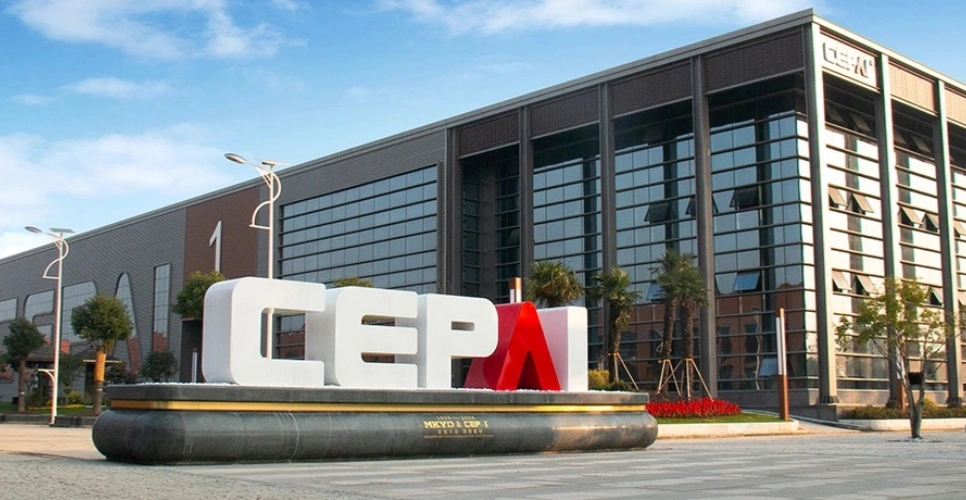
In January 2009, CEPAI Group Co., Ltd. was founded at 333 Jianshe West Road in Jiangsu Province's Jinhu Economic Development Zone with 200 million yuan in registered capital and 56,000 square meters of plant space. The company has API Q1, API 6A, API 6D, API 16C, API 602, ISO 9001, ISO 14001, ISO 45001, and CE certifications and a CNAS nationally recognised laboratory, ensuring that every Electric V-type Ball Valve produced has been tested against strict international standards before leaving the factory.
Manufacturing Scale and R&D Capability
CEPAI's Jiangsu Province-certified enterprise Technology Center, Fluid Control Engineering Technology Research Center, and High-Performance Fluid Control Device Engineering Research Center emphasise material and design research rather than component assembly. The business uses these research capabilities to develop trim materials and sealing designs for an Electric V-type Ball Valve for harsh-service applications in numerous sectors.
Proven Track Record with Major Industrial Groups
PetroChina, Sinopec, CNOOC, China Datang Group, Baowu Group, China Huaneng, and Wanhua Chemical are among CEPAI's supplier qualifying partners. CEPAI's harsh-service valves, such as the Electric V-type Ball Valve, exceed the strict demands of some of the world's most demanding industrial consumers due to comprehensive production and quality audits.
Conclusion
Harsh industrial environments demand valves built for durability and precision. The Electric V-type Ball Valve, backed by CEPAI's certified manufacturing, delivers dependable performance. Contact us to specify your next valve.
FAQ
Q1: What makes an Electric V-type Ball Valve suitable for harsh service applications?
A: Hardened trim materials, robust body construction, and precise V-notch geometry allow it to resist erosion, corrosion, and thermal stress better than many standard valve designs.
Q2: Can this valve handle abrasive, sand-laden fluids in oil and gas production?
A: Yes, hardened ball and seat surfaces are specifically designed to resist erosive wear from particulate-laden process streams.
Q3: How does an Electric V-type Ball Valve compare to a pneumatic ball valve in remote locations?
A: Electric actuation removes dependency on compressed air supply, making it more reliable for remote or unmanned harsh-service installations.
Q4: What material options are available for corrosive service?
A: Duplex stainless steel and other corrosion-resistant alloys can be specified for both body and trim depending on the chemical composition of the process media.
Q5: Does CEPAI manufacture Electric V-type Ball Valves certified for oil and gas applications?
A: Yes, CEPAI holds API 6D and API Q1 certifications and supplies qualified equipment to PetroChina, Sinopec, and CNOOC.
Facing Harsh Service Conditions? Talk to CEPAI's Engineering Team Today
If your project involves high temperatures, abrasive media, or corrosive chemicals, choosing the right valve manufacturer matters as much as the design itself. CEPAI's certified facilities, in-house research centers, and proven track record with major industrial groups make it a dependable source for harsh-service Electric V-type Ball Valves. Our engineers can help you select the right materials, actuator configuration, and trim design for your specific operating conditions. Reach out today to discuss your application requirements or request technical documentation. Contact us directly at cepai@cepai.com and let CEPAI help you build a more reliable, resilient control system.

Get professional pre-sales technical consultation and valve selection services, customized solution services.
About CEPAI
Popular Blogs