Pneumatic Sleeve Control Valve Applications: Where Are They Used?
The Pneumatic Sleeve Control Valve has become the control valve of choice whenever industry needs precise, repeatable flow control instead of simple on-off shutdown. This kind of valve has a sleeve-guided trim actuated by a pneumatic actuator, which offers a straight-through flow route and reliable, balanced control behavior and is well suited to demanding process conditions. Because of its capacity to cope with varying pressures, corrosive media, and constant cycling, the sleeve design has become a typical option across heavy industry, from upstream oil and gas facilities to petrochemical plants, power stations, and water treatment systems. In this article, we will look at where a Pneumatic Sleeve Control Valve is most often used, the qualities that make it a perfect fit for these applications, and the design features that enable it to function over such a broad spectrum of industrial applications.
Understanding the Pneumatic Sleeve Control Valve
Before we look at particular uses, it’s helpful to understand what makes this sort of valve fundamentally different and why its design is so conducive to so many industrial applications.
Structure and Working Principle
The Pneumatic Sleeve Control Valve employs compressed air to operate a diaphragm or piston actuator that moves a plug relative to a carefully machined sleeve assembly with designed flow apertures. The flow area available varies as the plug moves inside the sleeve. The valve is capable of modulating flow, not only switching flow on or off. The sleeve-guided design generates variable flow passageways that provide the operator with precision control of flow rate, pressure drop, and system responsiveness across a wide variety of operating circumstances. This design also has a straight-through double-seat valve arrangement, which helps balance forces on the plug, reducing the actuator force required to achieve correct placement and improving overall control stability.
Key Design Features
Several design aspects are responsible for the successful operation of a Pneumatic Sleeve Control Valve in demanding service. The pressure-balanced valve core ensures reliable operation even when the differential pressure across the valve changes, a phenomenon often seen in processes with variable load circumstances. The engineer may choose between equal-percentage and linear flow characteristics to suit the control behavior and adjust the valve responsiveness to the load requirements. The spring-return actuator mechanism ensures fail-safe operation, forcing the valve to a predetermined safe position in case of loss of air supply or emergency shutdown. These combined properties make the sleeve design appropriate for continuous automated process control rather than sporadic human modification.
Materials and Construction Options
As a Pneumatic Sleeve Control Valve is used in such a diverse range of settings, the construction materials are often chosen to suit the particular service. Valve bodies are readily available in WCB, WC6, WC9, LCB, LC2, LC3, CF8, and CF8M grades for a wide variety of applications from ordinary carbon steel duty to corrosive or cryogenic use. Internal trim components are often manufactured from 304, 316, or 316L stainless steel, sometimes with a hardened surface for increased wear resistance, while PTFE V-shaped packing and flexible graphite sealing systems provide long-term durability with less maintenance. Nominal sizes are normally available from DN15 up to DN400 mm and pressure classes from PN16 to PN64 and ANSI 150 to 600, enabling the valve to be matched to a wide variety of process needs.
| Specification | Typical Range |
|---|---|
| Nominal Diameter | DN15 – DN400mm |
| Pressure Class | PN16, PN40, PN64; ANSI 150, 300, 600 |
| Temperature Range | -17°C to +230°C |
| Body Materials | WCB, WC6, WC9, LCB, LC2, LC3, CF8, CF8M |
Applications in Oil and Gas Operations
Oil and gas facilities were among the first users of sleeve-guided pneumatic valves, and it is still one of the most challenging situations in which the design continues to prove itself.
Wellhead and Pipeline Flow Regulation
In upstream operations, a Pneumatic Sleeve Control Valve is widely used in wellhead flow control when a constant and repeatable throttling is necessary to regulate the production rates from a well. The ability of the sleeve trim to offer a regulated and predictable flow channel might be important in maintaining steady pipeline pressures when production quantities change over time. Its ability to be versatile for different pipe diameters and flow coefficients is especially beneficial to oil and gas producers who usually work over a wide range of pressures and flow rates. This allows one design platform to be applied to several wellhead configurations without a completely different valve family for each application.
Gas Processing and Feedstock Balancing
Accurate flow management is crucial for gas processing facilities to balance the feedstock to the separation, compression, and treatment units. This is supported by a Pneumatic Sleeve Control Valve that controls the gas flow via the designed apertures in the sleeve to provide gradual modulation rather than sudden changes that might upset downstream equipment. This is particularly true in plants with more than one process stream that must be balanced at the same time, since uneven flow management in one line may ripple across the remainder of the system. The straight-through design of the valve also helps to decrease turbulence and pressure loss, leading to more efficient gas handling throughout the processing train.
Pressure and Temperature Control in Upstream Facilities
In addition to flow regulation, a Pneumatic Sleeve Control Valve is also utilized extensively for pressure and temperature regulation applications in upstream facilities, such as separator pressure regulation and heat transfer fluid regulation in manufacturing equipment. The pneumatic actuator’s fast movement enables the valve to swiftly react to fluctuating process circumstances. The sleeve’s pressure-balanced design also provides for steady functioning with varying differential pressure. The fail-safe spring-return actuator of the valve is especially appreciated since upstream environments are generally remote or unattended facilities, which automatically default the system to a safe position in the event of a loss of air supply.
Applications in Petrochemical and Chemical Processing
Petrochemical and chemical facilities place some of the highest demands on flow control equipment, given the corrosive media and strict process tolerances typical of this sector.
Corrosive Media Handling
Petrochemical plants frequently handle aggressive chemicals that require careful material selection, and a Pneumatic Sleeve Control Valve built with stainless steel trim and corrosion-resistant body materials such as CF8 or CF8M is well suited to this environment. The combination of PTFE packing and flexible graphite sealing systems helps the valve maintain reliable containment even when exposed to challenging chemical compositions over extended operating periods. This resistance to corrosion is one of the main reasons the sleeve design has become a preferred option in process units where equipment failure could lead to safety incidents or costly product loss.
Reactor and Process Unit Regulation
Within chemical reactors and other sensitive process units, precise flow modulation is essential to maintaining product quality and preventing unwanted reactions. A Pneumatic Sleeve Control Valve supports this by offering smooth, repeatable throttling behavior across its full travel range, allowing operators to make fine adjustments in response to changing reaction conditions. The pressure-balanced plug design reduces the actuator force required for accurate positioning, which helps the valve respond promptly to control signals even as process differential pressure fluctuates during different phases of a batch or continuous reaction cycle.
Dosing and Chemical Injection Systems
Accurate dosing is another common application, where a Pneumatic Sleeve Control Valve regulates the precise addition of chemicals into a process stream. Because dosing errors can affect both product quality and downstream equipment, the valve's ability to modulate flow smoothly rather than in abrupt steps is particularly valuable. Equal-percentage flow characteristics, often available in this valve design, are especially useful in dosing service, since they allow fine control at low flow rates while still accommodating higher flow demands when needed, giving operators flexibility across a wide operating range.
Applications in Power Generation
Accurate valve management is important in power plants for efficiency and for the protection of essential equipment. The sleeve design is now a common fixture in various crucial systems.
Steam Control
Power-generating plants need valves for steam systems that can withstand high temperatures and varying pressures. A Pneumatic Sleeve Control Valve with a temperature rating up to 230°C is well suited for this need. The valve controls the flow of steam to keep the plant at the set pressures and temperatures. This is important for safety and efficiency, since rapid fluctuations in pressure might harm equipment downstream. Its pressure-balancing core maintains consistent management even with steam demand changes and varying electrical load.
Feedwater Regulation
Another major use is feedwater regulation, where constant flow management helps safeguard boiler operation and plant efficiency overall. A Pneumatic Sleeve Control Valve in feedwater service benefits from the consistent throttling features of sleeve trim to contribute to steady water levels and flow rates as demand varies across the daily operating cycle. Good regulation of the feedwater puts less strain on downstream equipment and enables more constant steam production, which in turn directly impacts the total plant output and efficiency.
Auxiliary System Management
In addition to the primary steam and feedwater loops, nuclear power plants utilize a Pneumatic Sleeve Control Valve in many auxiliary systems, such as cooling water circuits and other support procedures that keep the plant working smoothly. While these applications may not experience the harsh environment of the principal steam stream, they benefit from the valve’s reliable and repeatable control behavior and fail-safe actuator design. Aligning the repair of these auxiliary valves with major plant outages helps minimize interruption while maintaining all parts of the system functioning reliably.
| Power Plant System | Valve Function | Key Benefit of Sleeve Design |
|---|---|---|
| Steam Control | Maintains pressure and temperature targets | Stable performance under high temperature |
| Feedwater Regulation | Controls boiler water flow | Repeatable throttling supports efficiency |
| Auxiliary Systems | Regulates cooling and support processes | Fail-safe operation, reliable long-term service |
Applications in Water Treatment and General Industrial Use
Beyond heavy process industries, the sleeve design also serves a broad range of general industrial and water-related applications where dependable automated control is required.
Water and Wastewater Treatment
A Pneumatic Sleeve Control Valve is used in water treatment facilities for chemical dosing, flow management, and pressure control between treatment stages. The interior components of the valve are made from stainless steel, making it resistant to water treatment chemicals and pH variations, which ensures it is dependable in the varied chemical environments often encountered in treatment procedures. This option gives you consistent, automatic flow management, helping to ensure treatment quality and allowing facilities to satisfy regulatory discharge or supply criteria without human modification.
Metallurgy and Heavy Industry
A Pneumatic Sleeve Control Valve is used in metallurgical plants and other large industrial plants in cooling systems, process fluid control, and many utility lines that serve manufacturing processes. The valve’s rugged body structure and pressure-balanced design are well suited to these settings, which typically include high temperatures, particulate-laden media, and severe duty cycles. The valve may be specified at various sites within a single facility due to its versatility with varied pipe diameters and pressure classes, making spare parts management and operator familiarity easier.
OEM and Custom Industrial Projects
Many industrial applications need a Pneumatic Sleeve Control Valve that is custom-designed for particular pipe diameters, flow coefficients, trim designs, and control accessories, and not a conventional catalog item. Working with an OEM enables buyers to choose body materials, actuator choices, fail-safe actions, and documentation needs that are most suited to their unique project conditions. This versatility is particularly important for EPC contractors and equipment manufacturers that want a reliable control valve that can be easily integrated into a larger automated system, without being limited to one specific design.
Conclusion
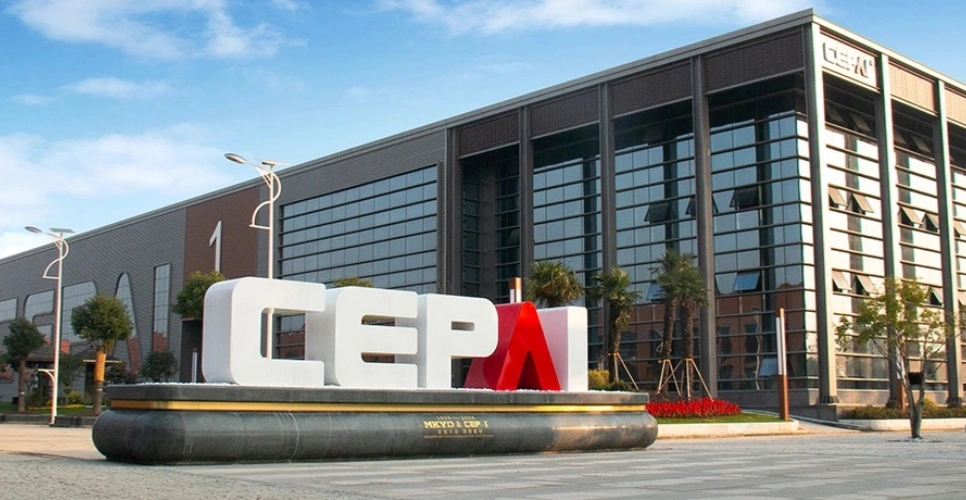
In oil & gas, petrochemical, power generation, and water treatment applications, the Pneumatic Sleeve Control Valve continues to demonstrate its worth with reliable, repeatable flow modulation and corrosion-resistant construction for challenging process conditions. The sleeve-type regulating valve has been supplied to PetroChina, Sinopec, CNOOC, and major industrial groups around the world, and the performance in these various applications has been proven. CEPAI Group Co.,LTD. Is a national high-tech enterprise in Jiangsu Province, China, with API6D, API602, ISO9001, and CE certifications. For engineers and procurement teams looking at flow control systems for demanding service, collaborating with an experienced, certified manufacturer is a realistic step toward dependable, long-term process performance. Contact us at sales@cepai.com to discuss your application, request technical documentation, or receive a detailed quotation for your project.
FAQ
Q1: What industries commonly use a Pneumatic Sleeve Control Valve?
A: It is widely used in oil and gas, petrochemical processing, power generation, water treatment, and general heavy industrial applications requiring precise flow modulation.
Q2: How does the sleeve design improve control accuracy?
A: The plug moves relative to engineered openings in the sleeve, creating variable flow passages that allow smooth, repeatable modulation instead of abrupt on-off switching.
Q3: Can this valve handle corrosive or high-temperature media?
A: Yes, with appropriate body and trim materials such as CF8M stainless steel, the valve can handle corrosive chemicals and temperatures up to 230°C.
Q4: Is the Pneumatic Sleeve Control Valve suitable for OEM customization?
A: Yes, it can be customized for specific pipe diameters, flow coefficients, pressure ratings, trim designs, and control accessories to fit unique project requirements.
Q5: What happens if air supply is lost during operation?
A: The spring-return actuator mechanism automatically drives the valve to a predetermined fail-safe position to protect the process and equipment.

Get professional pre-sales technical consultation and valve selection services, customized solution services.
About CEPAI
Popular Blogs