Pneumatic High Temperature Control Valve vs. Electric Control Valve
When a process runs hot, the choice of air-driven versus motor-driven actuation has an impact on safety, reaction time, maintenance cost, and the cost of the total system. Both pneumatic high temperature control valves and electric control valves may control steam, thermal oil, hot gas, or high-temperature chemical lines, but in very different ways. Neither is ideal for every facility; therefore, the best choice is to weigh them against your actual conditions: temperature, hazardous locations, available utilities, and control needs. In this article, we lay out the two alternatives side by side in straightforward language and teach you how to pick with confidence. From the technical team of CEPAI Group, a high-tech maker of valves, instruments, and wellhead equipment.
How Each Valve Works at High Temperature
Pneumatic Actuation Basics
The pneumatic high-temperature control valve employs compressed instrument air to operate a diaphragm or piston that pulls on the stem against a spring. The positioner compares the control signal (typically 4–20 mA) with the actual position of the stem and changes the air pressure until they are equal. The pneumatic components are kept within safe temperature limits since the actuator is distant from the heated body and frequently atop a bonnet that distributes heat. Another key advantage of pneumatic systems is that the spring also offers built-in fail-safe action, causing the valve to open or shut if air or signal is lost.
Main components:
- Diaphragm or piston actuator with a return spring
- Precise stem control positioner.
- Clean and dry supply air filter regulator
- Bonnet design to prevent heat transfer to the actuator
Electric Actuation Basics
An electric control valve employs a motor and gearbox to spin or drive the stem. It has a controller that receives the same 4–20 mA signal or a digital instruction. Modern electric actuators provide accurate positioning, customizable speed, and diagnostic data, without requiring a compressed air system. They require a clean electrical supply, and the electronics have to be maintained below their rated temperature, which involves careful bracket design, heat shields, or remote installation when the valve is hot. Standard versions are in their final position for power loss; therefore, the fail-safe operation requires a battery pack, a spring return unit, or a capacitor module.
The Valve Body and Trim at High Temperature
The body, bonnet, and trim are the same amongst actuators, and they decide whether the valve will tolerate heat. A pneumatic high temperature control valve for hot duty often has alloy steel or stainless steel castings, hardened trim, graphite or metal-reinforced packing, and an expanded or finned bonnet to protect the stem seal. Material selection varies with temperature, pressure, and fluid, from carbon steel for low heat to chrome-moly or stainless grades for heavier duty. The first step in any comparison is picking the proper body and trim for the process since the actuator selection does not modify the pressure-containing elements.
| Feature | Pneumatic High Temperature Control Valve | Electric Control Valve |
|---|---|---|
| Power source | Compressed instrument air | Electrical supply |
| Typical fail-safe | Spring return built in | Needs battery or spring-return add-on |
| Heat protection | Actuator isolated by bonnet design | Electronics need shielding or remote mounting |
| Control signal | 4–20 mA through positioner | 4–20 mA or digital commands |
Performance Compared: Speed, Accuracy, and Force
Response Speed and Stroke Time
Speed is important in process control to swiftly fix disturbances in loops. A pneumatic high-temperature control valve may react in fractions of a second to seconds, depending on the size of the actuator and air supply. Volume boosters or quick-exhaust valves can be added for emergency response. Pneumatic actuators are often faster than their electric cousins, with stroke times measured in several seconds to over a minute for larger sizes, but recent designs have decreased the difference. Hence, pneumatic actuation typically has the benefit for loops of pressure and temperature that need quick adjustment.
Positioning Accuracy and Control Stability
Also, electric actuators are known for precision positioning since the motor and gear train maintain position with little drift and frequently provide deadband adjustability and diagnostics. A pneumatic high-temperature control valve with a good-quality digital positioner may also provide great precision and repeatability and handle continuous modulation duty easily. The pneumatic design removes gear component wear and motor heating for extremely high cycle applications. Once again, accuracy is more a function of the positioner, trim design, and friction than the kind of actuator alone; therefore, look at the whole system.
Thrust, Torque, and Valve Size
Strong actuator thrust is needed for large high-pressure valves in hot service. Pneumatic actuators may create a lot of force only by raising the diaphragm area or adding a piston; therefore, the design remains compact and cost-effective in a lot of sizes. Electric actuators may also provide high torque, although heavy-duty often implies bigger and more expensive equipment. Therefore, a pneumatic high-temperature control valve is used in steam, power, and refining applications where big diameters and significant pressure drops are typical. Inform your supplier of the valve size, pressure drop, and shutdown need so they can determine the thrust margin for tight closure.
Performance at a glance:
- Quick-acting pneumatic, powerful
- Fine positioning: both excellent with contemporary positioners
- Efficient Pneumatic High thrust (in huge sizes)
- Diagnostics: electric, strong; speed may be programmed
Safety, Environment, and Utilities
Hazardous Areas and Explosion Protection
A number of heated process regions in oil, gas and chemical facilities are classed as hazardous. The pneumatic high temperature control valve is naturally well suited to these zones since the actuator itself includes no electrical parts and only the positioner or accessories require certification. Electric actuators need to be designed to an explosion-proof standard such as ATEX or IECEx under IEC 60079, making them more expensive and heavier. The simplicity of air-driven actuation decreases ignition risk and streamlines approvals in flammable or fire-prone locations. Safety is a concern in total installed cost and safety comparison.
Fail-Safe Behavior and Emergency Action
Sometimes what a valve does when things go wrong is more essential than what it does when things function. A pneumatic high-temperature control valve fails to a specified position via its spring. So steam supplies may fail closed, and cooling lines can fail open without added hardware. Electric designs can do this using spring-return or battery-backed actuators, but the additional components increase cost and maintenance. Specify the desired fail-safe action in the safety study and then choose the actuator that does this in the simplest and most reliable way across the anticipated plant life.
Utilities: Air Versus Power
Often the subject is decided by the utilities accessible. A pneumatic system needs clean, dry instrument air plus a compressor, drier, and distribution pipe, all of which are currently in use in most industrial operations. Remote or temporary locations may not have this infrastructure, and therefore an electric control valve that is linked to a power line may be simpler. Air quality is critical for a pneumatic high-temperature control valve because moisture or oil may harm positioners and diaphragms. Think about the whole life cost: compressed air requires energy, whereas electronic actuators mostly use power while moving.
| Factor | Favors Pneumatic | Favors Electric |
|---|---|---|
| Hazardous area | Yes, no electrical parts at actuator | Needs certified enclosure |
| Instrument air available | Yes | Less important |
| Remote site, no air system | Less suitable | Yes |
| Spring-return fail-safe | Built in | Add-on required |
Cost, Maintenance, and Choosing the Right Partner
Purchase Cost and Installation
The starting price depends on size, pressure class, and extras. A pneumatic high-temperature control valve normally has a reduced actuator cost, especially in bigger sizes. However, the air supply, tubing, and filter regulator needed contribute to installation costs. Electric actuators cost more for the same thrust, but wiring might be easier if electricity is already available. Also compare the whole installation cost, including accessories, cabling or tubing, certification, and commissioning. A fair comparison is to look at the whole cost of the project, not just the price of the actuator. Infrastructure is typically the deciding factor.
Maintenance and Service Life
Pneumatic actuators are mechanically simple. Diaphragms, springs, and seals are cheap and easily replaced, and technicians in most factories are well familiar with them. Pneumatic high-temperature control valves benefit from frequent tests of the air quality, the positioner calibration, and the packing condition. Electric actuators feature motors, gears, and electronics, which provide diagnostics and long life if maintained cool and clean, but repairs may require professional tools or factory servicing. Choose an actuator that matches the capabilities of your maintenance staff and spare parts policy to keep downtime brief and predictable throughout the valve’s service life.
Why Work with CEPAI
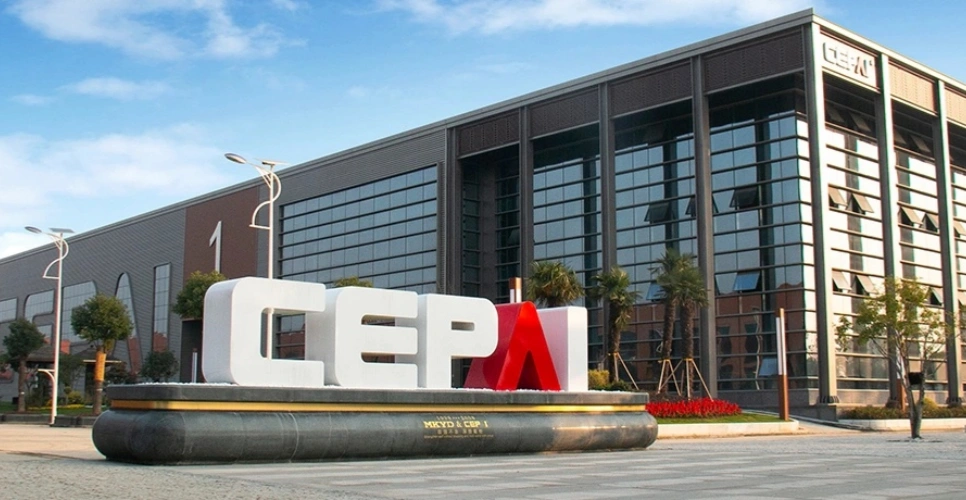
No matter the actuator you use, the valve has to be well constructed for heat. CEPAI Group was created in 2009 and has a 56,000 square meter factory and registered capital of 200 million yuan. CEPAI Group is a national high-tech firm that develops and manufactures wellhead devices, pipeline and regulating valves, instruments, and meters. Certified to API Q1, API 6A, API 6D, API 16C, ISO 9001, ISO 14001, ISO 45001, ISO 3834, ISO 17025, CE and PR2, it has a CNAS-approved laboratory and is a certified supplier to the world’s leading oil, gas, power and chemical firms, giving engineers the confidence to specify.
| Selection Item | Pneumatic | Electric |
|---|---|---|
| Actuator cost in large sizes | Generally lower | Generally higher |
| Utility needed | Instrument air | Electrical power |
| Maintenance skills | Common, simple | May need specialist service |
| Typical use | Hot steam, refining, power | Remote sites, precise slow control |
Conclusion
The pneumatic high temperature control valve and the electric control valve have their own advantages. Pneumatic designs are often used in steam, refining, and power plants because they provide rapid reaction, strong thrust, natural fail-safe action, and easy operation in dangerous situations. Electric designs are accurate, programmable, and independent of compressed air, which is suitable for distant or air-free situations. The proper decision relies on temperature, necessary speed, safety philosophy, utilities available, and overall cost. First choose the body and trim for the process, and then match the actuator to the plant. CEPAI Group has established quality processes, a recognized laboratory, and wide industry expertise to help engineers choose and provide control valves that work reliably in demanding hot service.
FAQ
1. Which actuator responds faster in hot service?
Pneumatic actuators generally respond faster than electric ones.
2. Which is better for hazardous areas?
Pneumatic actuation is simpler because the actuator has no electrical parts.
3. How is fail-safe action achieved?
Pneumatic valves use a built-in spring, while electric ones need a battery or spring-return add-on.
4. When is an electric valve preferable?
At remote sites without instrument air, or where programmable speed and diagnostics are valued.
5. Does the actuator change the valve body requirements?
No, body, bonnet, and trim are selected for temperature and pressure regardless of actuator type.
Choosing Your High Temperature Control Valve? Consult CEPAI Today
The best valve starts with accurate process data. Send your fluid, temperature, pressure, flow, pneumatic high temperature control valve size, area classification, and fail-safe requirements to sales@cepai.com, and the CEPAI team will reply with selection advice, a datasheet, and a tailored quotation. With certified quality systems, a CNAS-recognized laboratory, and wide experience across oil, gas, power, and chemical projects, we are ready to help you control hot processes safely and accurately.

Get professional pre-sales technical consultation and valve selection services, customized solution services.
About CEPAI
Popular Blogs