How Accurate Is an Adjustable Electric Three-eccentric Butterfly Valve?
The first question engineers pose when considering a butterfly valve for throttling duty is one of accuracy. An adjustable electric three-eccentric butterfly valve that combines a metal-seated, three-offset disk with an electric actuator may control flow considerably more accurately than many people anticipate from a quarter-turn valve. But “accurate” has several meanings: how near the disk gets to its designated location, how repeatable the flow is, how tightly the valve closes off, and how well the characteristic fits the process. This tutorial dissects accuracy into its component parts and illustrates what affects each. It is from the technical team of CEPAI Group, a producer of valves, instruments, and wellhead equipment.
What "Accuracy" Really Means for a Butterfly Valve
Positioning Accuracy and Repeatability
For an electric three-eccentric butterfly valve with adjustment, the first layer of precision is the degree to which the actuator places the disk. An electric actuator with a feedback potentiometer or encoder can repeatedly return to the same position and maintain the desired angle with a narrow deadband, sometimes within a fraction of one percent of travel. Repeatability is even more important than absolute precision in closed-loop control. The controller can compensate for a constant offset, but not for random dispersion. Look for actuators with adjustable deadband, torque limiting, and solid holding so the disk remains where the control signal places it.
The positioning accuracy relies on:
- Solution of the position feedback device
- Gear backlash and torque stability
- Control Settings: Deadband.
- Quality of the 4–20mA or digital command signal
Flow Characteristic and Control Resolution
The valve flow characteristic, which connects placement accuracy with flow accuracy. Butterfly valves tend to be closer to an equal % across the working range. The disk design has the most gain in the neighborhood of the closed position. Small angle changes cause large flow variations at low apertures. The well-sized adjustable electric three-eccentric butterfly valve operates mostly between 20 and 70 degrees of opening, where the gain is low, and the control is smooth. This band is the best way to gain enhanced control resolution without changing any hardware. Select the right size so that normal flow falls within this band.
Shutoff Accuracy and Sealing Performance
Accuracy is about stopping flow when you need to stop it. In a three-eccentric design, the shaft is eccentric to the center line of the seat, the center of the disk, and the axis of the cone such that the sealing surfaces meet only at the final closing moment and then wedge together without sliding friction. The adjustable motorized three-eccentric butterfly valve provides tight shut-off, usually to a Class IV to Class VI leakage level depending on seat design. Sealing is not elastic deformation, but geometry-dependent; therefore, performance is maintained under high temperature and abrasive use. Tell the manufacturer what leakage class you require. Tell him early enough so that he can match the actuator torque and the seat.
| Accuracy Component | What It Describes |
|---|---|
| Positioning accuracy | Closeness of disc angle to the command |
| Repeatability | Ability to return to the same position |
| Flow characteristic | How flow changes with opening |
| Shutoff accuracy | Leakage class when closed |
Design Features That Support Precision
The Three-Offset Geometry
The calculation of the geometry of an adjustable electric three-eccentric butterfly valve determines the accuracy. The first offset moves the shaft behind the seat plane, the second moves it off the pipe centerline, and the third tilts the axis of the sealing cone relative to the pipe axis. These offsets operate together to reduce friction between the seat and the disk as it opens and shuts, reducing wear and maintaining a steady sealing line across many cycles. The disk does not seat until the very end of the stroke, and is unseated immediately upon opening; hence the torque is consistent and predictable, enabling the actuator to accurately position the disk throughout its length.
Metal Seats and Laminated Sealing Rings
In many three-eccentric valves, there is a laminated metal sealing ring comprising multiple layers of stainless steel with graphite or other filler put on the disk and sealing against a hardened body seat. This arrangement gives exceptional flexibility for tight shut-off, temperature variation, and erosion resistance tolerance. Metal seats provide a durable sealing surface on an adjustable electric three-eccentric butterfly valve for demanding oil, gas, power, or chemical applications, guaranteeing continuous closed position and low-opening behavior during years of operation. Select the seat material for long-term accuracy according to the fluid, temperature, and pressure class.
Stem, Bearings, and Packing Quality
Precision is usually a matter of little things. The disk is mounted on a robust stem with low-friction bearings to reduce hysteresis (the difference in response between the valve going up and down). The stem is sealed with excellent packing such as graphite- or PTFE-based packs that do not cause additional friction to disrupt alignment. A carefully machined stem and properly preloaded packing in an adjustable electronic three-eccentric butterfly valve means the actuator has less work to do, leading to smoother control and a longer calibration life. Ask suppliers about stem material, bearing type, and packing design and materials for body and seat.
Design characteristics that assist precision:
- Rigid stem with reduced-friction bearings.
- Long-life packing properly loaded
- Precision machining of the seat and disk
- Stiff actuator mounting bracket
Choosing and Sizing for Better Control
Valve Size and Operating Angle
Size choice is perhaps the single most important factor in practical precision. This oversized adjustable electronic three-eccentric butterfly valve operates largely near closed, and has tiny variations in angle that cause enormous swings in flow. A little valve is working almost wide open and is losing control. Maximum flow is at around 70-80 degrees open. Aim to be in normal functioning in the midst of the stroke. Calculate the flow coefficient for minimum, normal, and maximum conditions and assess the pressure drop and angle of operation for each point. Sharing process data with your supplier might help you find that balance.
Actuator Selection and Control Signals
The actuator should be capable of providing sufficient torque to open and close the valve against maximum differential pressure with a safety margin. It ought to be able to provide the speed and resolution your loop demands. Adjustable electric three-eccentric butterfly valve. Electric actuators. Accepts a 4 to 20 mA input. Provides customizable travel limits, deadband, and position feedback. Digital communications enable diagnostics and remote configuration capabilities. Choose site control mode, power supply, and enclosure rating, and confirm stroke time is appropriate for the process. Fast loops may demand a different actuation.
Installation and Piping Effects
Installation affects accuracy in the real world. Butterfly valves create asymmetric flow patterns; thus, avoid placing them immediately downstream of elbows or pumps and allow some straight pipe upstream if possible. Also, for many services, place the shaft horizontally so that debris will not collect in the bearings. Follow the manufacturer’s recommended direction of flow. In an adjustable electric three-eccentric butterfly valve, the actuator will be strongly supported to minimize vibration, and the flange will be properly aligned to avoid body deformation that could affect seating. Correct installation preserves the accuracy planned and sized into the valve.
| Selection Step | Goal |
|---|---|
| Size from flow data | Normal flow in mid-stroke range |
| Check torque and margin | Reliable operation at maximum pressure drop |
| Choose control signal | Match controller and diagnostics needs |
| Plan piping | Reduce flow disturbance near the valve |
Verification, Standards, and the Right Partner
Testing and Calibration
Claims of accuracy must be verified. Factory test reports include shell testing, seat leakage testing, torque measurement, and actuator calibration for each valve. Adjustable electric three-eccentric butterfly valves. Check position feedback at many points throughout the stroke. Record travel limitation and deadband settings. Request flow-characteristic testing or flow-coefficient verification for critical control loops. The test certificates in the valve file provide maintenance teams a reference point for future inspection, and they help to verify compliance when auditors or customers want traceable evidence.
Standards and Certifications
Common language of quality: norms that are accepted. Butterfly valve design and testing is often linked to API 609, ISO 5752 for face-to-face measurements, and API 598 or ISO 5208 for leakage and pressure testing. Electric actuators are subject to electrical and hazardous-area regulations such as IEC 60079 where appropriate. Ask the supplier to explain what criteria can be met by each adjustable electric three-eccentric butterfly valve and to provide certificates to support these specifications. The standard that satisfies the project requirement reduces time during inspection and gives engineers confidence that the valve will perform as specified in tough field conditions.
Working with CEPAI
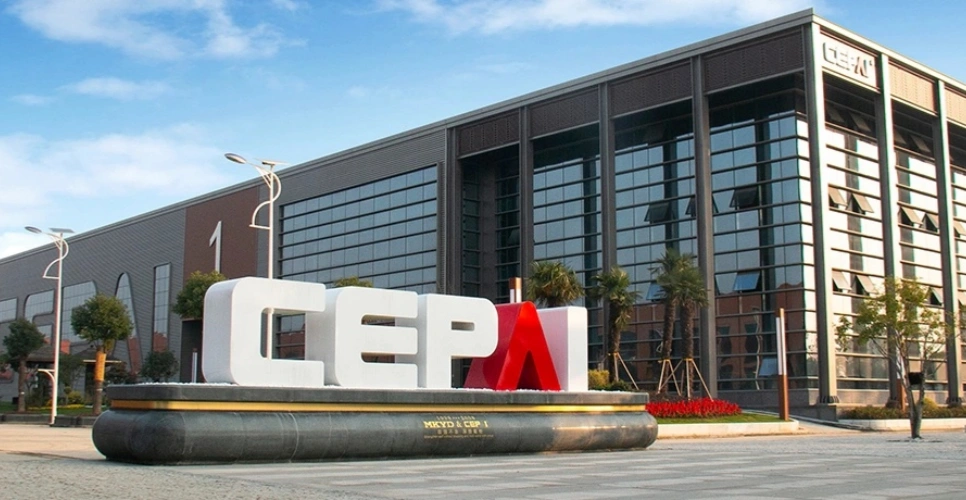
Valves are exact under regulated conditions. CEPAI Group was created in 2009. CEPAI Group has a total area of 56,000 square meters, with a registered capital of 200 million yuan. The firm designs and manufactures wellhead equipment, valves for pipelines and control, and instruments and meters. We are certified to API Q1, API 6A, API 6D, API 16C, ISO 9001, ISO 14001, ISO 45001, ISO 3834, ISO 17025, CE, and PR2 standards, have a CNAS-accredited laboratory, and are qualified as a supplier to large oil, gas, power, and chemical enterprises, which assists engineers requiring reliable valves and paperwork.
| Supplier Check | CEPAI Strength |
|---|---|
| Established | 2009, national high-tech enterprise |
| Facility | 56,000 sq. m plant, CNAS-recognized laboratory |
| Certifications | API Q1, API 6A, API 6D, ISO 9001, ISO 14001, ISO 45001, CE |
| Industries served | Oil and gas, petrochemical, power, metallurgy, water treatment |
Conclusion
The components of an adjustable electric three-eccentric butterfly valve are understood and regulated; it is possible to achieve very high accuracy. The electronic actuator and feedback enable positioning accuracy and repeatability. Flow accuracy is a function of size and valve characteristics. Three-offset geometry and metal seat enhance shutdown precision. Good stem quality, correct installation, and clear test records protect performance over time. Define the process data, choose the size so that typical flow is in the middle of the stroke, size the actuator to the torque and control needs, and verify the standards and certifications for best results. CEPAI Group Certified quality procedures. Recognized laboratory. Plenty of industry experience. Providing engineers with confidence in selecting and installing control valves.
FAQ
1. What makes a three-eccentric butterfly valve accurate?
Its three-offset geometry removes seat friction, giving smooth movement and tight shutoff.
2. How tight is the shutoff?
Metal-seated designs commonly reach Class IV to Class VI leakage, depending on seat type.
3. What operating range is best for control?
Normal flow should sit roughly between 20 and 70 degrees of opening.

Get professional pre-sales technical consultation and valve selection services, customized solution services.
About CEPAI
Popular Blogs