High Precision Pneumatic Single Seat Control Valve: How Does It Work?
High Precision Pneumatic Single Seat Control Valve is a kind of valve that uses a pneumatic control signal to provide exact linear motion to modify the flow area between the valve plug and the single seat. This enables control of flow, pressure, temperature, or liquid level in automated industrial operations. Based on the product information of CEPAI’s pneumatic control valve and the company's experience in the regulation of valves, wellhead devices, pipeline valves, instruments, and oil and gas equipment, this blog will introduce the working principle, core components, control process, selection logic, and industrial value of the High Precision Pneumatic Single Seat Control Valve.
Working Principle of a High-Precision Pneumatic Single-Seat Control Valve
From Control Signal to Valve Movement
High Precision Pneumatic Single Seat Control Valve starts operating on the basis of the difference between the process setpoint and the measured value, which is given by a signal sent by a controller. In many factories, this signal is transferred to a pneumatic or electro-pneumatic positioner, which subsequently controls the air pressure to the actuator. The actuator converts air pressure into mechanical force to push the valve stem and stopper up or down. The flow area fluctuates depending on the location of the plug in relation to the single seat. This sort of device is described in the product description of CEPAI as a control valve solution for automated process control when precise movement is needed for steady operation.
How the Single Seat Controls Flow
A high-precision pneumatic single-seat control valve controls flow through a single sealing and throttling point formed by the plug and seat. When the plug moves closer to the seat, the available flow area becomes smaller, reducing the flow rate. When the plug moves away from the seat, the flow area increases, allowing more medium to pass through the valve body. This simple but effective structure is widely used in process industries because it provides a clear relationship between valve travel and flow change. In CEPAI’s pneumatic control valve offering, the single-seat regulating concept supports accurate adjustment for gases, liquids, steam, and other compatible process media when materials and trim are properly selected.
Why Pneumatic Actuation Supports Precision
A high-precision pneumatic single-seat control valve uses pneumatic actuation because compressed air is practical, responsive, and widely available in industrial plants. The actuator receives air pressure from a positioner or control device and converts it into linear motion. This motion is transferred to the valve stem, which positions the plug accurately. Pneumatic systems can respond quickly to control changes, making them suitable for flow, pressure, temperature, and level loops. CEPAI’s product information for pneumatic control valves reflects this combination of valve body, actuator, and control accessories. For best results, the actuator must be selected according to differential pressure, required shutoff force, valve travel, fail action, and available instrument air supply.
| Working Element | Function in the Valve |
|---|---|
| Controller | Compares setpoint and process value |
| Positioner | Adjusts actuator air pressure for accurate travel |
| Pneumatic actuator | Converts air pressure into mechanical movement |
| Stem | Transfers actuator movement to the plug |
| Plug and seat | Regulate the flow opening |
| Valve body | Guides process medium through the control path |
Main Components and Their Functions
Valve Body, Bonnet, Plug, and Seat
A high-precision pneumatic single-seat control valve depends on the coordinated function of its main pressure-retaining and flow-control components. The valve body contains the flow passage and must match the pressure rating, temperature range, medium type, and pipe connection standard. The bonnet provides sealing and supports the stem assembly. The plug and seat form the central regulating and shutoff area, where small changes in plug position produce controlled changes in flow. CEPAI’s pneumatic control valve product information indicates that the valve is designed for industrial regulating service, so the body and trim selection should be based on actual process data. Buyers should define medium, pressure, temperature, flow rate, leakage class, and material requirements before finalizing the configuration.
Pneumatic Actuator and Positioner
A high-precision pneumatic single-seat control valve usually works with a pneumatic actuator and a positioner to achieve accurate control. The actuator provides the force needed to move the valve stem, while the positioner compares the required position with the actual valve position and adjusts air pressure until the valve reaches the correct travel. This closed-loop positioning improves response and repeatability. Depending on the plant automation system, the positioner may be pneumatic, electro-pneumatic, or smart digital. CEPAI’s broader product capability includes regulating valves and instruments, which is relevant because control accessories are part of the complete valve package. Buyers should confirm signal type, air supply pressure, fail action, enclosure protection, and hazardous-area requirements.
Packing, Stem, and Sealing Parts
A high-precision pneumatic single-seat control valve also relies on smaller components that support smooth operation and reliable sealing. The stem connects the actuator to the plug and must move accurately without excessive friction. Packing helps seal around the stem while allowing controlled movement. Gaskets and sealing parts prevent leakage at body-bonnet joints and other assembled areas. In precision control service, these details matter because stem friction can affect valve response. CEPAI’s pneumatic control valve information, combined with its manufacturing background in industrial valves, suggests that buyers should review packing material, gasket material, stem finish, trim compatibility, and maintenance access. Proper component selection helps the valve maintain stable movement during long-term automated operation.
The Control Process Step by Step
Measuring the Process Variable
A high-precision pneumatic single-seat control valve works as part of a control loop, so the process first needs to be measured. A transmitter measures flow, pressure, temperature, or liquid level and sends the value to a controller. The controller compares the actual process value with the required setpoint. If there is a difference, it calculates a correction and sends an output signal to the valve positioner. In this way, the valve does not operate independently; it responds continuously to the real operating condition of the system. CEPAI’s pneumatic control valve is suitable for this kind of automated regulation, especially in industries where stable process control supports production quality and operating efficiency.
Adjusting the Actuator Air Pressure
A high-precision pneumatic single-seat control valve changes position when the positioner adjusts air pressure to the pneumatic actuator. If the controller requires the valve to open more, the positioner changes the air pressure so the actuator moves the stem in the opening direction. If less flow is required, the air pressure changes in the opposite direction. The exact movement depends on the actuator type and fail action. The positioner monitors the valve travel and corrects any difference between the command signal and actual position. This is why a properly selected positioner is important for precision. CEPAI’s pneumatic control valve product information supports this control arrangement through its pneumatic regulating valve design.
Changing Flow Through Plug Travel
A high-precision pneumatic single-seat control valve achieves final control by changing plug travel. The plug position determines how much flow area is available between the plug and the seat. A small movement may produce a small flow change, while a larger movement produces greater flow capacity. The flow characteristic may be selected according to process requirements, such as linear or equal-percentage behavior. Correct sizing is important because the valve should operate within a useful travel range during normal conditions. CEPAI’s product information provides a pneumatic control valve basis, but the actual valve selection should be supported by Cv or Kv calculation, process pressure data, medium properties, and required control performance.
| Control Step | What Happens |
|---|---|
| Measurement | Transmitter detects process condition |
| Comparison | Controller compares value with setpoint |
| Signal output | Controller sends command to positioner |
| Air adjustment | Positioner regulates actuator pressure |
| Stem movement | Actuator moves stem and plug |
| Flow change | Plug-seat opening changes process flow |
Where the Valve Is Commonly Used
Oil and Gas Process Control
A high-precision pneumatic single-seat control valve is suitable for oil and gas applications where flow, pressure, or level must be regulated accurately. CEPAI is mainly engaged in research, development, and manufacturing of wellhead devices, pipeline valves, wellhead valves, regulating valves, instruments, and meters for oil and gas drilling and production. This background is important because oil and gas projects often require reliable valve operation, strong documentation, pressure-rated construction, and project-specific engineering support. The valve may be applied in production systems, utility lines, pipeline-related control, separation units, or other process packages. Buyers should specify medium composition, pressure range, temperature, flow range, connection type, and required accessories before ordering.
Petrochemical, Chemical, and Power Plants
A high-precision pneumatic single-seat control valve can also serve petrochemical, chemical, and power generation plants where automated control loops are essential. In petrochemical and chemical processing, the valve may regulate feed streams, steam, cooling water, fuel gas, or other process media. In power plants, it may help manage utility systems, auxiliary processes, or pressure and temperature control loops. CEPAI has industrial application experience across petrochemical, power, metallurgy, water treatment, and related downstream fields. For these users, the valve’s working principle is valuable because it provides continuous modulation rather than simple isolation. Proper material selection, actuator sizing, and positioner configuration help the valve match different process requirements.
Metallurgy and Water Treatment Systems
A high-precision pneumatic single-seat control valve is also useful in metallurgy and water treatment systems, where stable flow regulation supports continuous plant operation. Metallurgy facilities may require control of cooling water, gases, chemical additives, or other utility fluids. Water treatment plants may need controlled flow distribution, pressure management, or chemical dosing support. CEPAI’s downstream market background includes power, metallurgy, petrochemical, and water treatment applications, giving buyers a broader context for using pneumatic control valves in different systems. The valve’s single-seat structure provides a straightforward control path, while pneumatic actuation makes it easy to integrate into plant automation. Buyers should define fluid properties, required flow accuracy, valve material, and control signal requirements.
CEPAI Manufacturing and Quality Support
Company Background and Industrial Capability
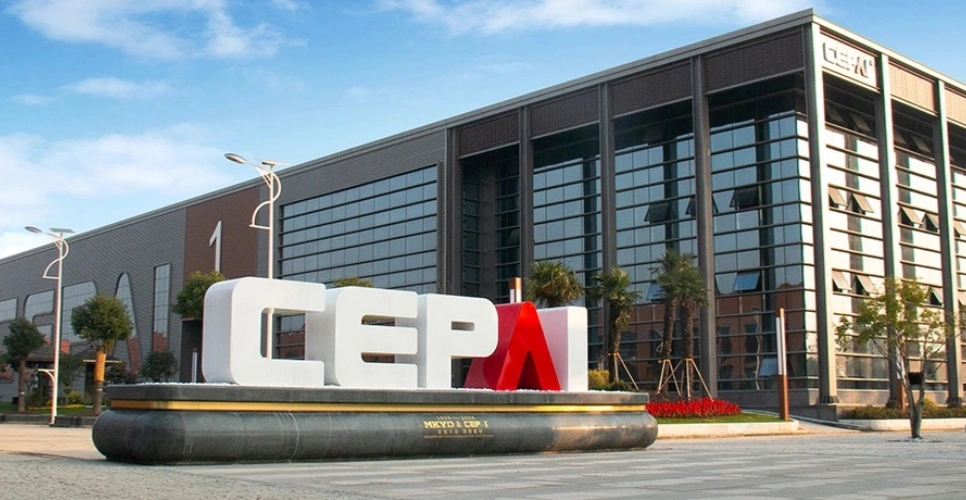
A high-precision pneumatic single-seat control valve requires careful manufacturing, accurate machining, reliable assembly, and strong inspection support. CEPAI Group Co., LTD. was established in January 2009 and is located at 333 Jianshe West Road, Jinhu Economic Development Zone, Jiangsu Province. The company has a registered capital of 200 million yuan and a total plant area of about 56,000 square meters. It is recognized as a national high-tech enterprise, a national specialized and special new “small giant” enterprise, a Jiangsu Smart Factory, a Jiangsu Internet benchmarking factory, and a winner of the Mayor Quality Award. For buyers, this manufacturing foundation supports confidence in the production of precision regulating valves for demanding industrial applications.
Certifications and Testing Resources
A high-precision pneumatic single-seat control valve is often purchased for engineering projects where certification and quality documentation are important. CEPAI has obtained API Q1, API 6A, API 6D, API 16C, API 602, ISO 9001, ISO 14001, ISO 45001, ISO 3834, ISO 17025, CE, PR2, and other management system and product-related certificates within its broader manufacturing framework. The company also has a CNAS nationally recognized laboratory, which supports inspection and testing. Buyers should always confirm which certificates apply to the specific ordered valve, but CEPAI’s quality background can help with supplier qualification, project approval, and final documentation. Test reports, material certificates, actuator data, and manuals should be requested during procurement.
Engineering Platforms for Fluid Control
A high-precision pneumatic single-seat control valve performs best when it is selected and engineered according to real process conditions. CEPAI has a Jiangsu Province-certified enterprise Technology Center, Jiangsu Province Fluid Control Engineering Technology Research Center, Jiangsu Province Industrial Design Center, Jiangsu Province High-Performance Fluid Control Device Engineering Research Center, Jiangsu Province Postdoctoral Innovation Practice Base, and a CNAS-recognized laboratory. These platforms support the development and verification of fluid-control products. For customers, this means CEPAI can assist with technical discussions related to valve sizing, trim design, actuator thrust, material compatibility, control accessories, and inspection planning. Good engineering communication helps the valve work correctly after installation and commissioning.
| CEPAI Strength | Why It Matters |
|---|---|
| Smart factory recognition | Supports controlled manufacturing processes |
| CNAS-recognized laboratory | Strengthens inspection and test confidence |
| API and ISO certifications | Helps meet project quality requirements |
| Fluid control research centers | Supports engineering and product development |
| Oil and gas product background | Useful for demanding process applications |
| Integrated research-production-service model | Supports the full valve lifecycle |
How to Specify It for Reliable Operation
Provide Complete Process Data
A high-precision pneumatic single-seat control valve should be selected using complete process data rather than only pipe size. Buyers should provide the medium, minimum flow, normal flow, maximum flow, inlet pressure, outlet pressure, pressure drop, operating temperature, density, viscosity, vapor pressure where applicable, and required control objective. These details allow the manufacturer to calculate Cv or Kv and recommend the correct valve size, trim, flow characteristic, actuator force, and accessories. CEPAI’s pneumatic control valve product information offers a product foundation, but the final configuration should always be based on the customer’s process datasheet. Accurate data helps the valve maintain useful travel and stable control during actual operation.
Confirm Materials and Pressure Rating
A high-precision pneumatic single-seat control valve must match the pressure, temperature, medium, and piping standard of the installation. The buyer should confirm body material, bonnet material, plug and seat material, stem material, packing, gasket, flange standard, pressure class, and painting requirements. Carbon steel, stainless steel, alloy steel, or special materials may be selected depending on the service condition. CEPAI manufactures valves for oil and gas and wider industrial uses, so material selection is a key part of the application review. Buyers should also request material certificates and inspection records when required by the project. Proper material and rating confirmation helps the valve fit safely and efficiently into the plant system.
Define Control Accessories and Documentation
A high-precision pneumatic single-seat control valve must be supplied with accessories that match the plant control system. Buyers should specify whether the valve needs a pneumatic, electro-pneumatic, or smart positioner. Other possible accessories include air filter regulators, solenoid valves, limit switches, handwheels, boosters, quick exhaust valves, or local indicators. Documentation is also important and should include datasheets, drawings, material certificates, pressure test reports, leakage test reports, actuator manuals, positioner manuals, and spare-parts lists. CEPAI integrates research, production, sales, and service, which supports communication during selection, delivery, and after-sales support. Clear accessory and documentation requirements make commissioning easier and help maintenance teams manage the valve over time.
Conclusion
A high-precision pneumatic single-seat control valve works by using pneumatic actuator force to move a plug against a single seat, creating accurate and continuous control of process flow. Its performance depends on proper sizing, material selection, actuator configuration, positioner accuracy, and quality manufacturing. CEPAI’s pneumatic control valve product information, manufacturing background, certifications, research platforms, and CNAS-recognized laboratory support its role as a capable supplier for demanding industrial applications. With complete process data and clear technical requirements, buyers can achieve stable, precise, and reliable automated control.
FAQ
Q1: How does a High Precision Pneumatic Single Seat Control Valve work?
It uses pneumatic actuator movement to position a plug against a single seat, changing the flow area.
Q2: What does the positioner do?
The positioner adjusts actuator air pressure to match the required valve travel accurately.
Q3: What process data is needed for selection?
Flow, pressure, temperature, medium properties, pipe size, and control requirements are needed.

Get professional pre-sales technical consultation and valve selection services, customized solution services.
About CEPAI
Popular Blogs