Electric Stainless Steel V-type Ball Valve: Soft or Hard Seal?
When specifying automated flow control equipment for industrial applications, one question dominates engineering discussions: should you select a soft seal or hard seal configuration for your electric stainless steel V-type ball valve? The answer hinges on your process media, operating conditions, and long-term performance expectations. Soft seals deliver superior shut-off tightness and lower actuation torque in clean, moderate-temperature services, while hard seals withstand abrasive particles, high temperatures, and aggressive chemicals that would rapidly degrade polymer seats. Understanding these trade-offs empowers procurement teams to match valve specifications precisely to application demands, optimizing both upfront investment and lifecycle costs.
Soft Seal vs Hard Seal: Performance and Application Analysis
Soft Seal Characteristics and Limitations
When leak-tight separation and smooth control are most important, soft-seated Electric Stainless Steel V-type Ball Valves are the most common choice. PTFE seats work consistently from very cold temperatures up to about 450°F (232°C), and they don't need much actuator force because the polymer has a low coefficient of friction. They are chemically compatible with most non-oxidizing acids, bases, and hydrocarbons. When filled with glass fiber or carbon, reinforced PTFE types can withstand temperatures up to 500°F (260°C) and have better mechanical strength against extrusion under high differential pressures.
But soft seals break down quickly when they come in contact with rough solids, oxidizing chemicals (like concentrated nitric acid or chlorine), or temperatures that are too high for their polymers. Thermal cycling can make the seat contract, which leads to more leaks over time. Media compatibility is another thing that process engineers need to think about. PTFE is resistant to most chemicals, but some fluorinated compounds and molten alkali metals can damage the structure of the polymer.
Typical Soft Seal Applications:
- Clean water and wastewater treatment systems requiring tight shutoff
- Natural gas distribution networks operating below 400°F
- Pharmaceutical and food processing lines demanding sanitary, zero-leakage designs
- HVAC chilled water and hot water loops with temperatures under 300°F
Hard Seal Advantages and Trade-offs
The Electric Stainless Steel V-type Ball Valve becomes a workhorse for tough working conditions when it is set up with metal seats. Stellite-6 overlays on both the ball and seat rings stop wear from catalyst particles in refineries, coal slurries in power plants, and rough mining tailings. These valves work effectively at temperatures up to 1000°F (538°C), which is much higher than what polymers can handle. This makes them essential for controlling high-pressure steam, thermal oil systems, and furnace off-gas.
The metal-to-metal contact needs more breakaway torque, which means the motors have to be bigger and use more power. Leakage rates at ANSI Class IV are fine for most industrial uses, but they allow small seepage that makes them unusable in ultra-clean or dangerous gas applications that need zero emissions at all times. As erosion raises gaps over time, they need to be lapped or replaced every so often.
Typical Hard Seal Applications:
- High-temperature steam systems in power generation and petrochemical plants
- Catalytic cracker slurry services with solid particle concentrations
- Geothermal brine handling with silica-laden fluids
- Refinery coker unit applications with extreme thermal cycling
Comparative Performance Table
| Parameter | Soft Seal (PTFE/RPTFE) | Hard Seal (Metal-to-Metal) |
|---|---|---|
| Leak Tightness | ANSI Class VI (bubble-tight) | ANSI Class IV (minor seepage) |
| Max Temperature | 450–500°F (232–260°C) | Up to 1000°F (538°C) |
| Abrasion Resistance | Poor; rapid wear from solids | Excellent; Stellite withstands particles |
| Actuation Torque | Low (30–50% less than metal) | High; requires robust actuators |
| Chemical Compatibility | Broad, except strong oxidizers | Universal; metals resist most chemicals |
| Service Life in Clean Media | 5–10 years typical | 10–20 years; longer in stable conditions |
| Cost Differential | Lower initial and replacement costs | Higher upfront; lower lifecycle cost in harsh service |
How to Choose Between Soft Seal and Hard Seal for Your Electric Stainless Steel V-type Ball Valve
Evaluating Process Media and Operating Conditions
To begin, describe your fluid. Soft seals work best with clean gases and liquids that don't have many solids in them. They save money and make the shutdown tighter. If your process stream has abrasive bits above 50 parts per million (ppm) or works above 450°F, you need to use hard plugs for your Electric Stainless Steel V-type Ball Valve. To test corrosive media, you need to look at chemical resistance charts side by side. For example, PTFE can handle most acids and liquids, but oxidizing agents like chlorine dioxide or bromine need metal seats that can resist halogen attack.
Changing pressure and temperature speeds up the breakdown of soft seals. Hard seals last longer in situations where there are a lot of thermal shocks, like when controlling a steam desuperheater or injecting coolant in an emergency. On the other hand, services that need to be steady in temperature and follow strict emission rules (like fugitive VOC limits and dangerous area ratings) are good reasons to invest in a soft seal for zero-leakage performance.
Actuator Selection and Control Requirements
Electric actuators for Electric Stainless Steel V-type Ball Valves need to have enough torque throughout the whole stroke. Most of the time, soft-sealed valves need 40–60% less breakaway torque than hard-sealed valves. This means that actuators can be smaller and cheaper. For instance, a DN100 (4-inch) soft-sealed valve might need a 200 Nm actuator, but a 400 Nm actuator is needed for the hard-sealed version, which doubles the cost of the actuator and the panel space it takes up.
The control signals must work with each other. Most current plants use 4-20mADC analog positioning, but older systems may need 0-10VDC or discrete pulse control. Positioners, limit switches, and valve position receivers work well with both types of seals. However, clever positioners that account for higher friction and hysteresis work best with hard-sealed valves.
Supplier Quality and OEM Customization Capabilities
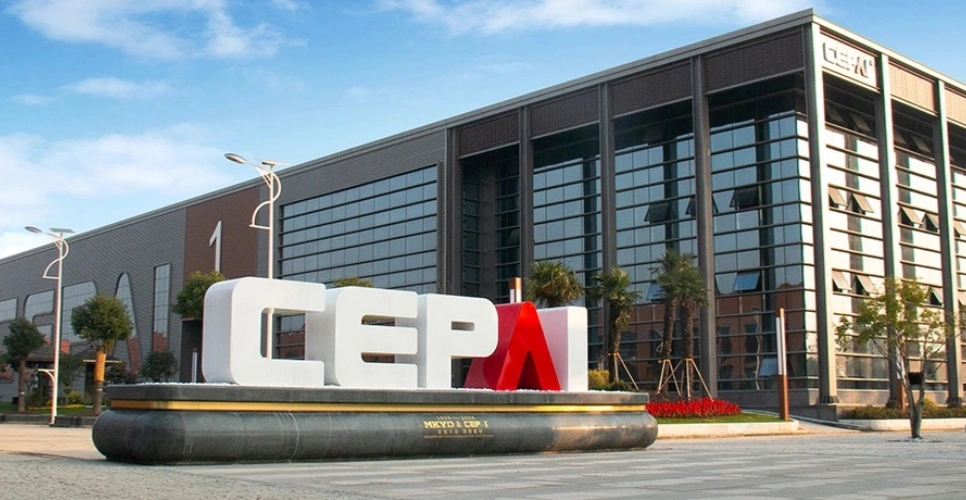
Source choices include more than just the type of seal; they also include the manufacturer's credentials. Find providers that have API 6D, ISO 9001, and CE certifications. These show that they follow foreign standards for creation and testing. Based in Jiangsu Province, CEPAI Group is a specialized valve manufacturer that runs CNAS-accredited laboratories and keeps up with API Q1 quality systems. They make sure that every Electric Stainless Steel V-type Ball Valve passes strict hydrostatic shell tests and seat closure verification protocols.
When normal store items don't work, being able to customize them is important. OEM customers often need flanges that aren't standard (ANSI 150/300/600 or DIN PN16/40/64), materials that aren't common (duplex stainless, Hastelloy trim), or accessories that are built in (solenoid valves, pneumatic accelerators, explosion-proof enclosures). Working with manufacturers that offer technical help and flexible production, like CEPAI's 56,000-square-meter intelligent plant with the longest high-precision flexible production line in the Asia-Pacific, speeds up project timelines and lowers procurement risk.
Installation, Maintenance, and Troubleshooting Insights for Optimized Valve Performance
Installation Best Practices
If you put your Electric Stainless Steel V-type Ball Valve in correctly, the seal will stay intact and last as long as it's supposed to. Before putting the valve in place, flush the pipes to get rid of welding slag, scale, and other building waste that could damage the seats during the first operation. Check that the flange is aligned within the limits set by ASME B16.5; if it's not, it puts bending pressures on the valve body, which changes the shape of the seat and leads to early leaking. Tighten the flange bolts in a star design to the required pressure level to keep the gasket from blowing out and the load from being uneven.
To handle vibrations and temperature changes, electric actuators need to be mounted securely. Connect the control wiring according to the actuator's instructions, making sure that the 4-20mADC signal cables are kept away from the high-voltage power lines to avoid electromagnetic interference. To set up the valve, stroke it fully open and closed while there is no flow. This will make sure it works smoothly and that the position feedback is set correctly before adding process media.
Maintenance Strategies for Extended Service Life
The PTFE seats in soft-sealed valves should be checked for compression set, extrusion, or chemical breakdown on a regular basis. In clean services, inspections should be done every 18 to 24 months; in harsh or high-cycle-frequency services, they should be done every six months. Split-body designs or bolted seat supports make it easy to add replacement seats, which cuts down on downtime.
Hard-sealed versions need different care. Every year, the surfaces of stellite seats are looked at visually to find wear patterns or scores. Small flaws can be fixed by lapping them in place with valve-grinding compound. When used in rough conditions, seats usually need to be replaced after 50,000 to 100,000 cycles. Every year, grease the stem packing with high-temperature graphite grease. This will stop fugitive emissions and lower the actuator torque.
Troubleshooting Common Seal Issues
When the Electric Stainless Steel V-type Ball Valve is closed, leakage past the seats shows up as a rise in pressure downstream. For soft seals, this usually means that the seat has been damaged by unwanted objects, expansion under too much differential pressure, or thermal breakdown. When seats are taken off, look for discoloration (from overheating), cracks (from chemical attack), or particles lodged in the material (from abrasion). Erosion or thermal distortion are the main causes of hard seal leaks. Use feeler gauges to check the seat-to-ball gaps and compare them to the manufacturer's specs.
Too much actuator force means there is a problem with friction. When it comes to soft-sealed valves, drag is increased by packing that is too tight or seats that stick out into the ball hollow. Loosen up the packing a bit and make sure the seats are properly installed. Hard-sealed torque spikes are often caused by rough surfaces or dirt stuck between metal faces. Take the assembly apart, clean it well, and lap the seats to make them smooth again.
Procurement Insights: Securing the Right Electric Stainless Steel V-type Ball Valve for Your Needs
Understanding Market Pricing and Value Drivers
There are a lot of different prices for Electric Stainless Steel V-type Ball Valves, depending on the type of seal, the size, and the complexity of the actuator. Soft-sealed DN50 (2-inch) valves with simple on-off actuators cost around $800 to $1,200 USD. Hard-sealed DN100 (4-inch) units with changing positioners and explosion-proof housings cost around $3,500 to $5,500 USD. Upgrades to body materials (CF8M vs. CF8) cost 15–20% more, and longer-lasting trim materials like duplex stainless double the price.
When you buy in bulk, you can get discounts. Orders of 20 or more units usually get price cuts of 10 to 15 percent, and contracts for more than 100 valves a year justify specialized engineering support and plans for consignment inventory. Shipping from China's production hubs (Shanghai, Ningbo, and Huaian ports) by ocean freight is cheaper than shipping by air express, but you need to plan for the 6–8 week wait times.
Evaluating Supplier Reliability and After-Sales Support
Carefully look over the manufacturer's qualifications. In addition to the basics of ISO 9001, you should look for certifications specific to your industry, such as API 6D for oil service, SIL ratings for safety-instrumented systems, and NACE MR0175 compliance for sour gas uses. The CEPAI Group has many certifications for their Electric Stainless Steel V-type Ball Valves, such as API Q1, CE marking, and multiple SIL approvals. They also have CNAS laboratory testing tools that separately verify performance claims.
Support after the sale is what sets good suppliers apart from great partners. Check to see if exploded view drawings, repair instructions, and spare parts kits are available. Remote diagnostic tools, like CEPAI's AR-enabled operation and maintenance guiding system, let you fix problems in real time without having to go to the plant. This cuts down on downtime in sites that are spread out physically. Most warranties last between 12 and 18 months after the product is put into service. For important uses, you can negotiate for longer coverage.
Initiating Procurement and Requesting Samples
Ask suppliers for specific information about the type of media, the ranges of temperature and pressure, the type of control signal, and any other needs you may have, such as a fire-safe design, low-emission packaging, or a sanitary finish. Ask for dimensional models that confirm the face-to-face measures according to ASME B16.10, the flange drilling according to ASME B16.5, and the actuator mounting according to ISO 5211, making sure that they work with the infrastructure that is already in place.
Before agreeing to large orders, sample buying checks the performance of the Electric Stainless Steel V-type Ball Valve. Ask for protocols for factory acceptance testing (FAT) that include shell pressure tests, seat leakage tests according to API 598, and verification of actuator stroke. For complicated projects, plan trips to the factory to check out the production processes, see how quality control is done, and talk directly with the engineering teams about whether customization is possible.
Conclusion
Choosing between soft and hard seals for your Electric Stainless Steel V-type Ball Valve has a big impact on how reliable it is and how much it costs. In clean, moderate-temperature applications that need zero leakage, soft PTFE seats work great. On the other hand, metal-to-metal hard seals work great in rough, high-temperature, and chemically hostile settings where polymers fail. It's important for specifications to combine things like the features of the media, the needs for thermal cycling, the cost-effectiveness of the whole lifespan, and the supplier's skills and support infrastructure. Having this technical knowledge gives procurement professionals the confidence to choose the right valves and match equipment specs to process needs while working with certified manufacturers who can provide custom solutions, thorough testing, and quick service after the sale.
FAQ
1. What seal type works best for corrosive chemical applications?
Compatibility is different for each drug. Most acids, caustics, and liquids that don't oxidize soft PTFE seals don't damage them, but strong oxidizers like chlorine, bromine, or pure nitric acid break them down quickly. For these uses, universal resistance is provided by hard metal seats for the Electric Stainless Steel V-type Ball Valve made from Hastelloy C or Monel. Before choosing a seal, you should always compare your media to the manufacturer's chemical compatibility charts.
2. Can I retrofit an existing manual valve with an electric actuator and change the seal type?
It's easy to add actuators to manual valves that meet the requirements of ISO 5211 standards for mounting flanges. Changing seal types, on the other hand, means taking apart the valve body to change the seat rings. This means there is a chance of damaging the sealing surfaces or misaligning the parts. Talk to the original maker or an experienced repair provider to find out if it's possible and to get replacement parts that are designed to fit your valve model.
3. What are typical lead times and minimum order quantities for custom electric V-type ball valves?
Standard catalog configurations from well-known companies like CEPAI Group ship within 3–4 weeks. Lead times are extended to 6–8 weeks for custom specs like rare materials, non-standard flanges, or unique actuator configurations. This is to allow for technical review, material sourcing, and fabrication. There are different minimum order quantities. For standard products, most suppliers will take orders for just one unit. However, for custom designs, they may need commitments of 5–10 units to cover the costs of making the mold and setting it up.
Partner with CEPAI Group for Reliable Electric Stainless Steel V-type Ball Valve Solutions
For automated valve buying to go smoothly, you need a seller with technical know-how, top-notch manufacturing, and quick customer service. Based in Jiangsu Province, CEPAI Group Co., Ltd. is a national high-tech company and specialized "little giant" manufacturer that makes Electric Stainless Steel V-type Ball Valves that are carefully designed to meet your process needs. Our smart plant is approved under API Q1 and ISO 9001 and has CNAS-accredited testing labs. It makes valves with DN15–450mm ranges in both soft PTFE and hard metal seal types that meet ANSI and DIN pressure ratings.
Our engineering team can help you with anything from standard stock items to OEM-customized solutions that include special trim materials, explosion-proof actuators, or built-in positioners. They can give you full technical advice and quickly send you a quote. Our Shanghai, Ningbo, and Huaian ports let us ship goods all over the world. We can handle ocean, air, and express logistics to meet your project deadlines. You can email our team at cepai@cepai.com to get product datasheets, set up factory acceptance tests, or talk about the terms of a bulk buy. Find out how working with a qualified manufacturer can help you save time and money on purchases.

Get professional pre-sales technical consultation and valve selection services, customized solution services.
About CEPAI
Popular Blogs