Why Choose an OEM Pneumatic Sleeve Control Valve?
It’s a smart move for distributors, EPC contractors, system integrators, and industrial companies who require specialised flow-control products but aren’t ready to set up an entire production line of their own to choose to do it by choosing an OEM Pneumatic Sleeve Control Valve. A Pneumatic Sleeve Control Valve combines sleeve-guided throttling, pneumatic actuation, and control-system compatibility, making it appropriate for oil and gas, petrochemical, chemical, power, metallurgy, and water-treatment applications. This guide details the technical flexibility, stable quality, project-ready documentation, and long-term commercial value of OEM cooperation, drawing on CEPAI’s pneumatic control valve product information and the company’s background in regulating valves, pipeline valves, wellhead equipment, instruments, and industrial fluid-control devices.
Understanding OEM Value in Pneumatic Sleeve Control Valves
OEM Supply Helps Meet Project-Specific Requirements
An OEM Pneumatic Sleeve Control Valve is essential, as a single valve specification is seldom used in industrial applications. Varied end users may demand varied pressure classes, body materials, sleeve trim designs, actuator sizes, fail actions, positioners, accessories, inspection documentation, and branding requirements. OEM collaboration lets consumers specify a valve package to meet their market or project standard, and a skilled manufacturer handles the engineering and manufacturing. The CEPAI pneumatic control valve product literature describes the valve as an industrial regulating solution, and its wider product range comprises regulating valves, pipeline valves, wellhead valves, instruments, and meters. That provides OEM purchasers with a viable basis for customised supply in demanding fluid-control applications.
Sleeve-Guided Control Supports Stable Regulation
A Pneumatic Sleeve Control Valve uses a sleeve-type internal trim to guide flow and regulate the medium through controlled openings. The pneumatic actuator moves the plug in relation to the sleeve, changing the flow area according to the control signal. This structure is widely used where accurate throttling and repeatable control are important. For OEM buyers, the sleeve-guided design is useful because it can be adapted to different flow capacities, flow characteristics, and process conditions. CEPAI’s product information for pneumatic control valves supports this regulating-valve concept, making it relevant for automated process systems. When properly sized, the valve can help maintain stable flow, pressure, temperature, or level in continuous industrial operation.
OEM Branding Expands Market Opportunities
An OEM Pneumatic Sleeve Control Valve allows brand owners and distributors to expand their product range under their own commercial strategy. Instead of investing in full valve design, machining, assembly, testing, and certification infrastructure, the buyer can cooperate with a manufacturer that already has production capability. This is especially useful when customers ask for pneumatic sleeve-type regulating valves, but the buyer’s core strength is sales, engineering integration, local service, or project management. CEPAI’s industrial base and manufacturing experience can support OEM partners that need private-label options, customized documentation, packing marks, nameplates, and project-specific datasheets. In this model, the OEM partner can serve customers quickly while maintaining a consistent brand presence.
| OEM Requirement | Customization Possibility for Pneumatic Sleeve Control Valve |
|---|---|
| Brand identity | Nameplate, label, manual, packing mark, document format |
| Technical sizing | Cv/Kv, trim design, flow characteristic, pressure rating |
| Automation | Actuator type, fail action, positioner, signal input |
| Materials | Body, bonnet, sleeve, plug, stem, seat, packing, gasket |
| Inspection | Pressure test, leakage test, functional test, witness inspection |
| Documentation | Drawings, certificates, test reports, spare-parts lists |
Technical Benefits of Choosing OEM Cooperation

Flexible Configuration for Different Process Media
A Pneumatic Sleeve Control Valve can be configured for gas, liquid, steam, and many industrial process fluids when the correct materials, trim, pressure rating, and sealing components are selected. In OEM projects, this flexibility is a major benefit because one buyer may serve several industries at the same time. For example, a petrochemical customer may need corrosion-resistant materials, while a power plant may focus on steam or utility control. CEPAI’s pneumatic control valve product information provides the basis for industrial regulation service, while its background in oil and gas and process valves supports application-specific discussions. OEM buyers should provide medium composition, operating temperature, inlet pressure, outlet pressure, flow range, and control objective to obtain a suitable configuration.
Pneumatic Actuation Fits Industrial Automation
A Pneumatic Sleeve Control Valve is commonly selected because pneumatic actuators are widely used in industrial automation. Many plants already have instrument air systems, making pneumatic operation practical for control loops. The actuator can be paired with a pneumatic, electro-pneumatic, or smart positioner to improve positioning accuracy and response. Additional accessories may include air filter regulators, solenoid valves, limit switches, boosters, quick exhaust valves, and handwheels. For OEM buyers, these options make it easier to serve customers with different automation standards. CEPAI’s product range includes regulating valves and instruments, which is relevant when a buyer needs a complete valve package rather than only a bare valve body.
Accurate Sizing Improves Real-World Performance
A Pneumatic Sleeve Control Valve should be selected by process data and Cv or Kv calculation, not only by pipe size. OEM buyers must be especially careful because the final customer will expect the valve to perform correctly after installation. Correct sizing considers minimum, normal, and maximum flow; inlet and outlet pressure; pressure drop; temperature; density; viscosity; and medium type. The selected sleeve trim and actuator must match these conditions. CEPAI’s engineering and manufacturing background helps support project-specific selection, especially for regulating valve applications. A well-sized OEM valve is easier to commission, responds more predictably to control signals, and helps the end user maintain stable process operation.
CEPAI’s Manufacturing Strength for OEM Projects
Industrial Foundation and Smart Manufacturing
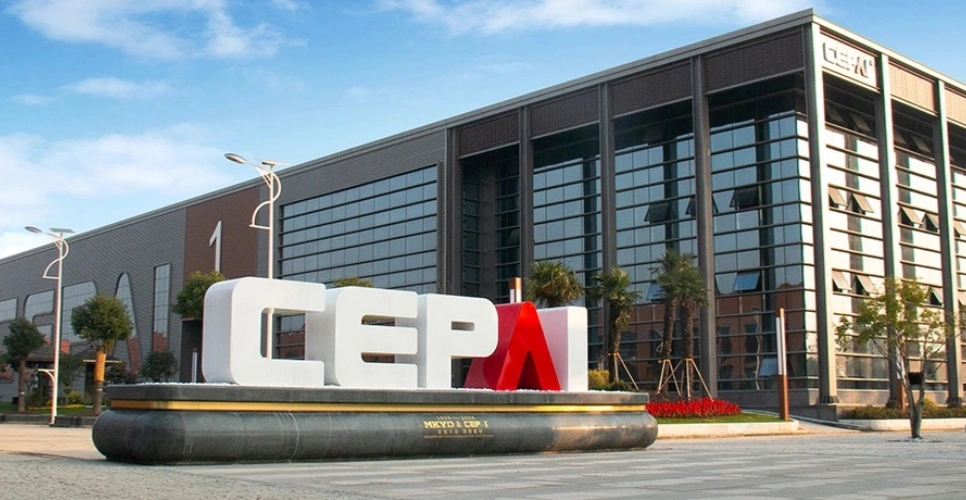
A Pneumatic Sleeve Control Valve requires careful machining, assembly, testing, calibration, and documentation. CEPAI Group Co., LTD. was established in January 2009 and is located at 333 Jianshe West Road, Jinhu Economic Development Zone, Jiangsu Province. The company has a registered capital of 200 million yuan and a total plant area of about 56,000 square meters. It is recognized as a national high-tech enterprise, a national specialized and special new “small giant” enterprise, a Jiangsu Smart Factory, a Jiangsu Internet benchmarking factory, and a winner of the Mayor Quality Award. For OEM buyers, this manufacturing foundation supports repeatable production, controlled quality, and the ability to handle project-based valve orders.
Certifications Support Project Approval
A Pneumatic Sleeve Control Valve supplied through OEM cooperation may enter projects where supplier qualification, inspection records, and certificates are essential. CEPAI has obtained API Q1, API 6A, API 6D, API 16C, API 602, ISO 9001, ISO 14001, ISO 45001, ISO 3834, ISO 17025, CE, PR2, and other management system and product-related certifications within its broader manufacturing framework. Buyers should confirm which certificates apply to the exact valve order, but this background helps during technical review and procurement evaluation. CEPAI also has a CNAS nationally recognized laboratory, which strengthens testing credibility. For OEM partners, these capabilities can simplify customer audits, quality documentation, and final handover.
Engineering Platforms Strengthen Custom Development
A Pneumatic Sleeve Control Valve performs best when the supplier can support engineering review, not just production. CEPAI has a Jiangsu Province-certified enterprise Technology Center, Jiangsu Province Fluid Control Engineering Technology Research Center, Jiangsu Province Industrial Design Center, Jiangsu Province High-Performance Fluid Control Device Engineering Research Center, Jiangsu Province Postdoctoral Innovation Practice Base, and a CNAS-recognized laboratory. These platforms support valve development, testing, fluid-control research, and product improvement. OEM buyers benefit from this because custom valve orders often require technical discussions about trim selection, actuator thrust, leakage class, material compatibility, face-to-face dimensions, accessory matching, and documentation. Strong engineering support makes OEM cooperation smoother from inquiry to delivery.
| CEPAI Capability | OEM Buyer Benefit |
|---|---|
| Smart factory background | More consistent production control |
| CNAS-recognized laboratory | Stronger inspection and testing confidence |
| API and ISO certifications | Easier project qualification and review |
| Engineering research centers | Better support for customized valve selection |
| Regulating valve experience | Practical understanding of control applications |
| Oil and gas supplier qualifications | Credibility in demanding industrial markets |
Commercial Advantages for OEM Buyers
Faster Market Entry with Lower Development Burden
An OEM Pneumatic Sleeve Control Valve helps companies enter or expand in the control-valve market without investing years in independent product development. Designing and manufacturing pneumatic sleeve-type valves requires casting or forging supply chains, precision machining, actuator selection, assembly experience, pressure testing, leakage testing, calibration, and document management. By working with CEPAI, OEM partners can focus on customer development, tender participation, local engineering support, and after-sales relationships. CEPAI’s experience in wellhead devices, pipeline valves, regulating valves, instruments, and meters gives buyers a broad technical supply base. This cooperation model is especially useful for distributors and system integrators who need reliable products under project deadlines.
Better Brand Consistency Across Repeated Orders
A Pneumatic Sleeve Control Valve used in OEM supply should be consistent from one order to the next. Brand owners need repeatable dimensions, material quality, actuator configuration, test procedures, nameplates, manuals, and packing standards. CEPAI’s smart factory background and quality management systems support controlled production and traceable documentation. This matters because many OEM buyers sell to long-term customers who expect the same valve configuration for maintenance, replacement, or plant expansion. Consistent supply also supports spare-parts planning, product catalog development, and technical training. When an OEM partner can offer stable product quality and documentation, it strengthens customer trust and improves the brand’s position in competitive industrial markets.
Total Value Beyond the Purchase Price
An OEM Pneumatic Sleeve Control Valve should be evaluated by total value, not only by the lowest quoted price. Important factors include sizing support, material traceability, machining quality, actuator selection, positioner compatibility, inspection scope, documentation, packing, delivery reliability, spare-parts support, and technical communication. CEPAI integrates scientific research, production, sales, and service, which supports OEM buyers throughout the product lifecycle. For industrial customers, a valve that arrives with clear drawings, certificates, test reports, manuals, and spare-parts information is easier to approve, install, and maintain. This creates value for the OEM partner because fewer project delays and smoother commissioning help protect brand reputation.
Application Areas for OEM Pneumatic Sleeve Control Valves
Oil and Gas and Pipeline Control
A Pneumatic Sleeve Control Valve is often used in oil and gas production, pipeline systems, wellhead-related process lines, separation units, gas handling, injection systems, and pressure-control stations. CEPAI is mainly engaged in the research and manufacturing of wellhead devices, pipeline valves, wellhead valves, regulating valves, instruments, and meters for oil and gas drilling and production. The company has obtained supplier qualifications with PetroChina, Sinopec, and CNOOC, which is relevant for OEM partners serving energy markets. In these applications, buyers usually need pressure-rated construction, reliable actuator operation, material certificates, inspection reports, and project documentation. OEM cooperation helps match the valve package to these demanding requirements.
Petrochemical, Chemical, and Power Plants
A Pneumatic Sleeve Control Valve can be used in petrochemical, chemical, and power generation facilities for feedstock control, steam service, cooling water regulation, fuel gas control, utility systems, reaction feed adjustment, and pressure management. These plants rely on automated control loops, so the valve must work accurately with field instruments and control systems. CEPAI’s product information for pneumatic control valves supports regulating service, while its industry experience includes downstream markets such as petrochemical, power, metallurgy, and water treatment. OEM buyers serving these industries should define material requirements, pressure class, leakage class, actuator action, positioner type, signal input, and required documentation before ordering.
Metallurgy and Water Treatment Projects
A Pneumatic Sleeve Control Valve is also useful in metallurgy and water treatment projects where stable flow regulation supports continuous operation. Metallurgy facilities may use it for cooling water, gas control, process additives, and utility lines. Water treatment plants may apply it in flow distribution, pressure control, filtration processes, chemical dosing, and system balancing. CEPAI’s downstream application background aligns with these industries, making OEM supply practical for buyers who serve multiple markets. In these applications, the buyer should confirm medium cleanliness, solids content, pressure drop, flow range, material compatibility, actuator response, and maintenance access. A well-specified valve package can improve automation convenience and process consistency.
How to Specify an OEM Order Successfully
Prepare a Complete Technical Datasheet
A successful OEM Pneumatic Sleeve Control Valve order starts with a detailed technical datasheet. The buyer should provide medium name, fluid state, minimum flow, normal flow, maximum flow, inlet pressure, outlet pressure, pressure drop, temperature, density, viscosity, pipe size, pressure class, connection standard, control objective, leakage requirement, and installation conditions. This information allows CEPAI to review sizing, sleeve trim, materials, actuator thrust, and accessory requirements. Without complete data, the quotation may not reflect the real process needs. A clear datasheet also helps OEM partners communicate professionally with end users and EPC contractors, reducing repeated revisions during technical clarification, manufacturing, inspection, and commissioning.
Define Branding, Packing, and Documentation
An OEM Pneumatic Sleeve Control Valve must meet both technical and commercial presentation requirements. Buyers should define nameplate content, logo use, model coding, manual format, packing marks, certificate templates, language requirements, and private-label arrangements. Technical documentation should include datasheets, general arrangement drawings, material certificates, pressure test reports, leakage test reports, actuator and positioner manuals, calibration records, and recommended spare-parts lists. CEPAI can support project documentation based on agreed requirements, helping OEM partners deliver a complete and professional package. Good documentation also makes the final customer’s installation, commissioning, and maintenance work easier, which improves satisfaction and supports future repeat business.
Plan Inspection, Delivery, and After-Sales Support
An OEM Pneumatic Sleeve Control Valve should be inspected according to an agreed quality plan before shipment. Common inspection steps include dimensional checking, material verification, hydrostatic shell testing, seat leakage testing, actuator functional testing, positioner calibration, painting inspection, and final document review. For critical projects, OEM buyers may request witness inspection or third-party inspection. CEPAI’s CNAS-recognized laboratory and quality background support structured testing and reporting. After delivery, OEM partners should also plan spare parts, installation guidance, and technical communication. This lifecycle support is important because the end user will judge the OEM brand not only by delivery but also by commissioning support and long-term service response.
Conclusion
Choosing an OEM Pneumatic Sleeve Control Valve gives buyers flexibility, faster market access, brand customization, technical support, and project-ready documentation. The valve’s sleeve-guided trim and pneumatic actuation make it suitable for oil and gas, petrochemical, chemical, power, metallurgy, and water-treatment applications. CEPAI’s manufacturing scale, certifications, engineering platforms, CNAS-recognized laboratory, and industry qualifications make it a strong OEM partner. For the best result, buyers should provide complete process data, define branding requirements, and agree on inspection and documentation standards early.
FAQ
Q1: What is an OEM Pneumatic Sleeve Control Valve?
It is a customized pneumatic sleeve-type regulating valve supplied under project or brand-specific requirements.
Q2: Can the valve be private-labeled?
Yes. OEM cooperation can include nameplate, manual, packing, and document customization.
Q3: What industries use this valve?
Oil and gas, petrochemical, chemical, power, metallurgy, and water treatment commonly use it.
Q4: What data is needed for sizing?
Flow rate, pressure, temperature, medium properties, pipe size, and control requirements are needed.
Q5: Why choose CEPAI for OEM supply?
CEPAI offers manufacturing capability, engineering support, testing resources, certifications, and industry experience.
Partner with CEPAI for OEM Pneumatic Valve Solutions
If you need an OEM Pneumatic Sleeve Control Valve partner, CEPAI can support your project from technical review to production, testing, documentation, and delivery. Share your process medium, flow range, pressure, temperature, material requirements, actuator preference, control signal, fail action, branding needs, and inspection standards with the CEPAI team. With experience in regulating valves, pipeline valves, wellhead equipment, instruments, and industrial fluid-control solutions, CEPAI can help you build a practical valve package for your market. Contact cepai@cepai.com today to request OEM support, technical documents, or a quotation.

Get professional pre-sales technical consultation and valve selection services, customized solution services.
About CEPAI
Popular Blogs