What Are the Key Benefits of a Lift Check Valve?
A Lift Check Valve is a non-return valve designed to allow flow in one direction and automatically prevent reverse flow when pressure conditions change. In oil and gas production, wellhead systems, pipelines, petrochemical plants, power facilities, metallurgy, and water-treatment projects, this simple function can protect equipment, maintain process direction, and support stable operation. This blog explains the key benefits of a Lift Check Valve, using CEPAI’s API 6A-related lift check valve product information as a reference point, along with CEPAI Group’s manufacturing background, certifications, testing resources, and industrial application experience.
Understanding the Lift Check Valve and Its Role
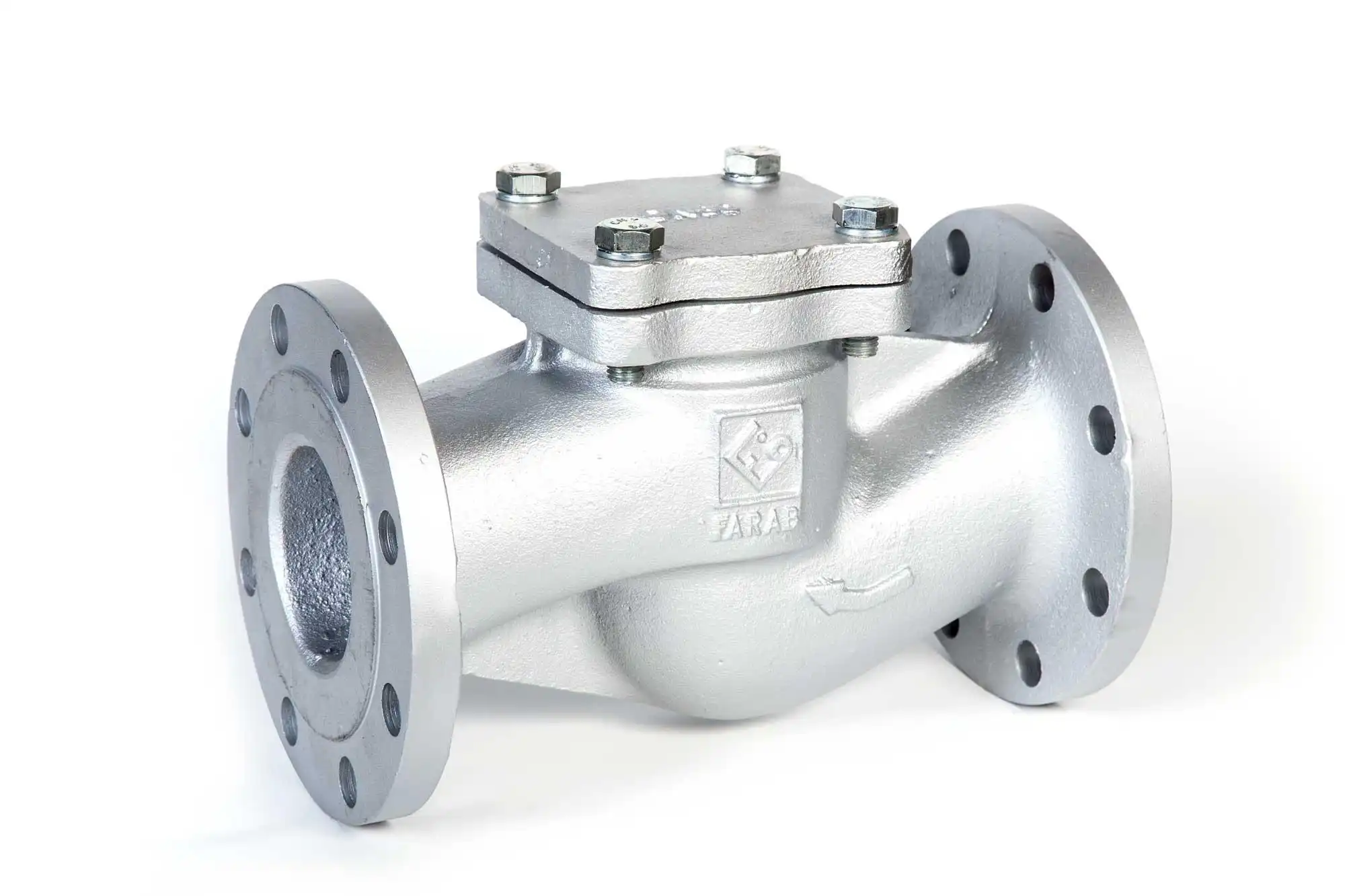
What a Lift Check Valve Is Designed to Do
A Lift Check Valve is designed to stop reverse flow automatically without requiring manual operation or external actuation. When forward flow pressure is sufficient, the disc, piston, or poppet lifts from the seat and allows the medium to pass through. When the flow slows, stops, or attempts to reverse, the closing element returns to the seat and blocks backflow. CEPAI’s API 6A-related lift check valve product information is especially relevant for oil and gas buyers because API 6A valves are commonly associated with wellhead and Christmas tree equipment, where pressure control and flow direction are critical. For buyers, the main benefit is dependable non-return protection in a compact and mechanically straightforward valve structure.
Why It Matters in Industrial Flow Systems
A Lift Check Valve matters because reverse flow can interfere with process stability, damage upstream equipment, contaminate process lines, or reduce system efficiency. In pump discharge lines, wellhead assemblies, injection systems, pipelines, and process skids, a non-return valve helps keep media moving in the intended direction. Compared with manually operated isolation valves, a Lift Check Valve responds automatically to flow and pressure changes. CEPAI’s background in wellhead devices, pipeline valves, wellhead valves, regulating valves, instruments, and meters for oil and gas drilling and production supports this application logic. Buyers should view the valve not as a minor piping accessory, but as an important protection component in a complete fluid-control system.
How It Differs from Other Check Valve Types
A Lift Check Valve differs from a swing check valve because its closing element generally moves in a guided lifting motion rather than swinging on a hinge. This guided movement can be valuable in compact layouts, high-pressure services, and applications where a direct seating action is preferred. Swing check valves are often used in larger, steady-flow pipelines, while lift designs can be attractive for engineered systems requiring responsive closure and compact construction. CEPAI’s API 6A-related product information points toward demanding oilfield environments, where check valve design, pressure rating, sealing behavior, material selection, and testing records all matter. The best choice depends on flow rate, pressure, temperature, medium, installation orientation, and project standards.
| Feature | Lift Check Valve Benefit | Buyer’s Practical Check |
|---|---|---|
| Automatic non-return action | Prevents reverse flow without manual operation | Confirm flow direction and installation position |
| Guided closing element | Supports controlled seating movement | Review valve structure and drawings |
| Compact construction | Useful for skids and wellhead packages | Check dimensions and maintenance access |
| High-pressure suitability | Applicable to demanding systems when properly rated | Confirm API class and test reports |
| Simple operating principle | Easy to understand and specify | Provide process data and standards |
Key Benefits for Safety, Protection, and Reliability
Automatic Backflow Prevention
One of the most important benefits of a Lift Check Valve is automatic backflow prevention. The valve does not require an operator to close it when reverse flow begins; instead, the disc or piston returns to the seat due to reverse pressure, gravity, spring assistance if designed, or the change in flow force. In oil and gas systems, this is valuable because pressure changes can occur quickly, especially around wellhead equipment, production lines, and injection systems. CEPAI’s API 6A-related lift check valve information supports use in demanding pressure-control environments. For buyers, automatic action means the valve can protect the system direction continuously as long as it is correctly selected, installed, and maintained according to the application.
Protection for Pumps, Pipelines, and Equipment
A Lift Check Valve helps protect pumps, compressors, pipelines, vessels, and upstream equipment by reducing the chance of unwanted reverse flow. In a pump discharge line, for example, backflow may cause mechanical stress or reverse rotation if not properly controlled. In pipeline and wellhead systems, reverse flow may disrupt pressure balance or process direction. CEPAI manufactures pipeline valves, wellhead valves, and oilfield fluid-control equipment, so this protection role is closely aligned with its industrial product background. Buyers should specify the medium, flow rate, operating pressure, temperature, and pressure class so the manufacturer can recommend a suitable Lift Check Valve configuration. Correct selection helps the valve support equipment protection over long-term service.
Dependable Seating in Demanding Conditions
A Lift Check Valve can provide dependable seating when designed and manufactured with suitable materials, proper machining, and appropriate test procedures. In the closed position, the disc or piston contacts the seat to block reverse flow. For API 6A-related oilfield projects, buyers often focus on pressure rating, material class, temperature class, product specification level, and inspection requirements. CEPAI has experience in API-related valves and high-pressure oil and gas equipment, making these details important during procurement. A Lift Check Valve should be reviewed for seat material, body material, end connection, pressure rating, leakage testing, and documentation. Strong seating performance is not just a design feature; it depends on manufacturing quality and application matching.
Application Benefits Across Major Industries

Oil and Gas Wellhead and Production Systems
A Lift Check Valve is highly relevant in oil and gas wellhead and production systems where flow direction and pressure containment are important. CEPAI is mainly engaged in the research, development, and manufacturing of wellhead devices, pipeline valves, wellhead valves, regulating valves, instruments, and meters for oil and gas drilling and production. The company’s API 6A-related product information is therefore directly connected to these applications. A Lift Check Valve may be considered for wellhead assemblies, production manifolds, injection lines, and high-pressure control packages. Buyers should confirm API requirements, rated working pressure, bore size, end connections, material class, temperature class, and required test documentation before ordering.
Petrochemical, Power, and Chemical Processing
A Lift Check Valve can also add value in petrochemical, power, and chemical processing systems where reverse flow prevention supports stable plant operation. In petrochemical and chemical plants, it may be installed in feed lines, utility systems, pump discharge lines, chemical dosing circuits, or pressure-control sections. In power plants, it may support cooling water, fuel gas, condensate-related lines, and auxiliary process systems. CEPAI has industrial market experience beyond oil and gas, including downstream sectors such as petrochemical, power, metallurgy, and water treatment. A Lift Check Valve for these industries should be selected according to pressure, temperature, corrosiveness, flow stability, pipe size, sealing requirements, and maintenance access.
Metallurgy, Water Treatment, and Utility Lines
A Lift Check Valve is useful in metallurgy, water treatment, and utility systems where automatic non-return protection is needed in compact or controlled piping layouts. Metallurgy facilities may use it for cooling water, process gases, additives, or utility lines. Water treatment plants may use it in pump discharge systems, filtration lines, chemical dosing units, and pressure-control circuits. CEPAI’s downstream application background includes metallurgy and water treatment, making its valve manufacturing experience relevant for these buyers. For water and utility applications, a Lift Check Valve should be reviewed for material compatibility, flow velocity, pressure drop, installation orientation, possible solids content, and inspection requirements. Good specification helps the valve fit the real operating environment.
| Industry | Typical Lift Check Valve Use | Main Selection Focus |
|---|---|---|
| Oil and gas | Wellhead, production, injection, manifolds | API rating, pressure class, material traceability |
| Petrochemical | Process and utility non-return service | Medium compatibility and leakage testing |
| Power | Cooling, condensate, auxiliary systems | Temperature, pressure, and documentation |
| Chemical | Dosing, pump discharge, process lines | Corrosion resistance and sealing |
| Metallurgy | Cooling water, gases, additives | Durability and flow stability |
| Water treatment | Pump discharge, filtration, dosing | Material, orientation, maintenance access |
Buying and Specification Advantages
Compact and Practical Valve Selection
A Lift Check Valve often provides a compact and practical non-return solution, especially where installation space is limited or where a guided closing element is preferred. In skid-mounted oilfield equipment, process packages, pump stations, and dense piping areas, a compact valve structure can simplify layout planning. CEPAI’s API 6A-related valve information is useful for buyers who need a check valve suitable for engineered oil and gas service. However, compactness should not replace technical review. Buyers should request general arrangement drawings, end connection details, pressure rating, flow direction marking, installation orientation guidance, and maintenance access information. A properly specified Lift Check Valve can combine space efficiency with reliable reverse-flow prevention.
Clear Standards and Documentation Support
A Lift Check Valve can be easier to approve in industrial projects when it is supported by clear standards and documentation. CEPAI has obtained API Q1, API 6A, API 6D, API 16C, API 602, ISO 9001, ISO 14001, ISO 45001, ISO 3834, ISO 17025, CE, PR2, and other management system and product-related certificates within its broader manufacturing framework. Buyers should confirm which certifications apply to the exact Lift Check Valve order, but this background supports project confidence. Common documents include material certificates, dimensional inspection reports, hydrostatic shell test reports, seat leakage test records, coating reports, product drawings, and operation manuals. Documentation helps with supplier approval, installation, commissioning, and future maintenance.
Easier Maintenance Planning and Spare Parts Control
A Lift Check Valve supports easier lifecycle management when the supplier provides clear drawings, part identification, and maintenance guidance. Buyers should request spare-parts information for seats, discs, pistons, springs if applicable, gaskets, seals, and bolting. In high-pressure oilfield or API-related services, traceability and correct replacement parts are particularly important. CEPAI integrates scientific research, production, sales, and service, which is helpful for buyers who need communication after delivery. A Lift Check Valve should be selected not only for initial installation but also for long-term inspection and service planning. Clear spare-parts lists and maintenance recommendations help plant teams prepare for scheduled shutdowns and reduce uncertainty during field service.
Why CEPAI Is Relevant for Lift Check Valve Buyers
Manufacturing Scale and Company Background
A Lift Check Valve for demanding service requires reliable manufacturing infrastructure, experienced machining, controlled assembly, and qualified testing. CEPAI Group Co., LTD. was established in January 2009 and is located at 333 Jianshe West Road, Jinhu Economic Development Zone, Jiangsu Province. The company has a registered capital of 200 million yuan and a total plant area of about 56,000 square meters. It is recognized as a national high-tech enterprise, a national specialized and special new “small giant” enterprise, a Jiangsu Smart Factory, a Jiangsu Internet benchmarking factory, and a winner of the Mayor Quality Award. This background gives buyers confidence when selecting a Lift Check Valve for oil and gas or industrial fluid-control projects.
Engineering Platforms and CNAS Laboratory
A Lift Check Valve benefits from supplier engineering resources because proper design, material selection, testing, and documentation all affect final performance. CEPAI has a Jiangsu Province-certified enterprise Technology Center, Jiangsu Province Fluid Control Engineering Technology Research Center, Jiangsu Province Industrial Design Center, Jiangsu Province High-Performance Fluid Control Device Engineering Research Center, Jiangsu Province Postdoctoral Innovation Practice Base, and a CNAS nationally recognized laboratory. These platforms support product development, technical verification, and inspection capabilities. For buyers, this means a Lift Check Valve can be discussed with attention to pressure rating, materials, seat design, end connections, testing scope, and application requirements. Strong engineering support is valuable in API 6A and other critical industrial projects.
Supplier Qualifications and Industry Experience
A Lift Check Valve supplier should understand the needs of upstream, midstream, and downstream industries. CEPAI has obtained supplier qualifications with PetroChina, Sinopec, and CNOOC, and serves markets connected with China Datang Group, China Chemical Engineering, Baowu Group, China Huaneng, Wanhua Chemical, Yulong Petrochemical, Jingbo Holding, and China Power Construction. This market experience is relevant because a Lift Check Valve may be used in oilfield production, pipeline systems, petrochemical units, power plants, metallurgy facilities, and water-treatment projects. Buyers benefit from a supplier that understands both valve manufacturing and end-user documentation expectations. Industry experience helps align technical specifications, inspection requirements, delivery planning, and after-sales communication.
Conclusion
A Lift Check Valve offers key benefits in automatic backflow prevention, equipment protection, compact installation, dependable seating, and project-friendly documentation. It is especially valuable in oil and gas, API 6A wellhead service, pipelines, petrochemical plants, power systems, chemical processing, metallurgy, and water treatment. The best results come from matching the valve to real operating conditions, including medium, pressure, temperature, flow rate, materials, end connections, and testing requirements. CEPAI’s manufacturing scale, API-related experience, certifications, engineering platforms, and CNAS-recognized laboratory make it a practical supplier for demanding check valve projects.
FAQ
Q1: What is the main benefit of a Lift Check Valve?
It automatically prevents reverse flow and helps protect equipment and pipelines.
Q2: Where is a Lift Check Valve commonly used?
It is used in oil and gas, petrochemical, power, chemical, metallurgy, water treatment, and utility systems.
Q3: Is a Lift Check Valve suitable for API 6A service?
It can be specified for API 6A-related applications when designed, rated, and tested to project requirements.
Q4: What documents should buyers request?
Request drawings, material certificates, pressure test reports, leakage test reports, and inspection records.
Q5: Why choose CEPAI for Lift Check Valve supply?
CEPAI offers API-related valve experience, manufacturing capability, certifications, testing resources, and engineering support.
Get CEPAI Support for Your Lift Check Valve Project
If your project needs a reliable Lift Check Valve, CEPAI can help review your operating conditions and recommend a suitable configuration. Share your medium, flow rate, pressure, temperature, pipe size, end connection, installation orientation, material requirements, API or project standards, testing needs, and documentation expectations. CEPAI’s experience in wellhead devices, pipeline valves, regulating valves, instruments, manufacturing, and testing supports oil and gas, petrochemical, power, metallurgy, chemical, and water-treatment projects. Contact cepai@cepai.com today to request technical support, product information, or a project-specific quotation.

Get professional pre-sales technical consultation and valve selection services, customized solution services.

About CEPAI
Popular Blogs